By Matthew Szymanski, AIA
AIA North Carolina Small Firm Exchange Representative
AIA North Carolina Advanced Leadership Program, Steering Committee

“Get things in writing” is classic advice for dealing with customers. Our firm recently learned this advice can be just as helpful regarding the firm’s internal systems and standards.
At Arx Design Collaborative/Armature Design Build, a 20-person design-build partnership, we invested time into documenting our processes for new team members. Our initial goal was simple: improve our onboarding experience and for onboarding materials to be “clear and effective enough that new team members could contribute in meaningful ways on day one.” We understood if we wanted a new team member’s experience to be significantly better, we had to make an equally significant investment in the training process and materials.
Currently, our company-wide effort to standardize processes and share institutional knowledge has had an unexpected side benefit. We elevated our internship programs. The process has also advanced recruitment of more experienced team members. When we jumped into the initiative, we didn’t expect it would help every member of our team by creating a consistent, high-quality experience for our clients, consultants, and builders.
What We Did
Many larger firms have substantial manuals or online resource materials. We decided it was an achievable goal for us, because we wanted the firm to grow. We considered subscription services related to onboarding, but they didn’t offer resources directly related to what we wanted for our new team members.
We started with a big question, “What does someone need to know to successfully complete a job for our firm?” That question created a dead-end for our first effort. We later settled on, “What do we already have that is helping people accomplish good work, and can we significantly improve it?”
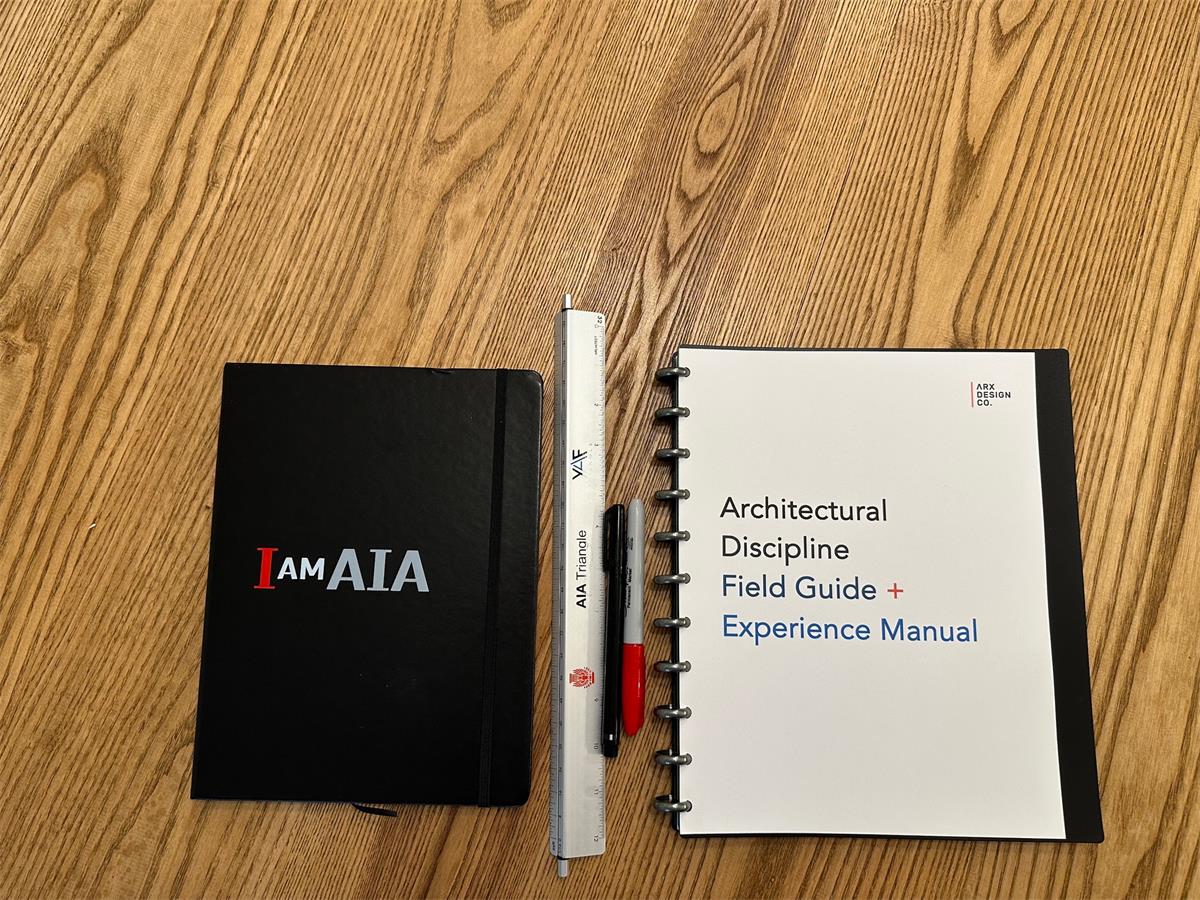
Striking branding and the added ease of printable checklists can both help achieve buy-in. © Arx Design Collaborative
Our new goal became to collect these “best practices” into a well-formatted framework of institutional knowledge. In speaking to team members, we discovered nearly everyone had a small cache of specially worded emails, well-formatted project updates, helpful check-lists, and directions for various tasks stashed on their individual computers.
With the promise to connect the firm’s day-to-day processes with training new staff, we secured firm-wide buy-in. Team members generously shared checklists, step-by-step directions, templates, and sample drawings
Collecting all this information presented one challenge. Gaining consensus on which examples to include as “best practices” proved a second, substantial hurtle. We couldn’t plow forward because team members work with different clients in different ways.
We found a simple solution. Instead of defining one set of firm-wide templates, we adopted several well-crafted samples of each “best practices” item. This less contentious option took less time than developing a single standard. We named the template collections “primary recommendations” rather than “best practices,” allowing for flexibility and encouraging customization to fit individual clients. The firm now has a central “template bank” organized by project phases to make finding the resources more intuitive.
The Surprising Impact
While we initially focused on collecting examples and templates to help new team members, even experienced team members claimed benefit from the well-articulated formats and guidelines gathered. Previously, senior team members created their own collection of sample materials for mentoring. Mentors complained that answering the questions of new team members decreased productivity. Now, mentors find it easier to mentor others because they can draw from a robust collection of options. The resource library also allows new staff to proactively answer their own questions, making time with mentors more meaningful.
Aligning our foundational project processes also allows for more flexibility. Team members can take extended vacations, take off to care for family, or go on maternity/paternity leave knowing others can fill in for them thanks to the consistency and accessibility of our “primarily recommendations.” It’s also made job-sharing a realistic option.
We initially worried that standard scripts and templates might make our communications feel less genuine. It turned out to be the opposite. The templates freed up energy for the truly personal and creative aspects of our work. Having baseline information and communications covered allows us to focus on personalizing messages to reflect the unique requirements of each client and project. It also helps us each speak in same language — especially with clients — at every stage of a project.
Our clients are also better informed. They consistently express positive experiences during every phase of design and construction.
Creating a Central Firm Knowledge Hub
Yes, consultants, apps, and subscription services offer relevant help in standardization. Our firm explored these options. In the end, we found keeping things simple, as a hub of bundled and consistent sample documents and checklists, worked best. We built a central drive with strict naming conventions and folders for every kind of communication and deliverable.
- Here’s a sampling of what we included:
- Template emails
- Scripts for introductions, standard updates, and hard conversations
- Sample Drawings
- Drawing checklists
- Typical consultant requests
- Point by point explanations of our standard contracts
- Examples of specification language
- Frequently asked questions from clients
- Instructions for preparing clients for complex decisions
The Key
One additional element we added is a step-by-step project timeline with integrated sharable links to the resources for each phase. These links take team members to a folder filled with relevant checklists and sample documents. The timeline organizes this vast hub of resources and firm knowledge in an accessible and functional way. Because it uses folder links, it remains up-to-date even as we adjust and develop new content.
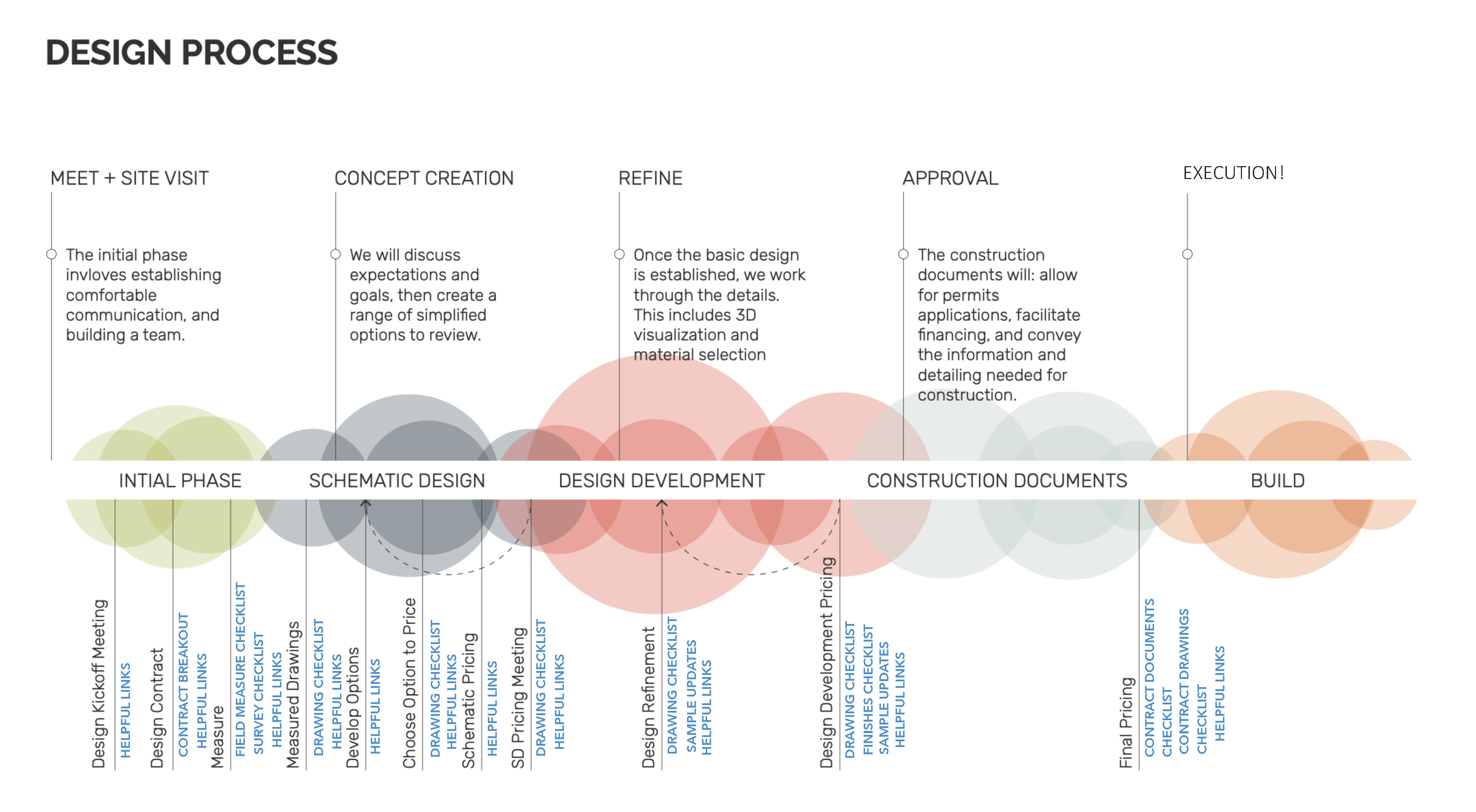
A project timeline contains links to connect our team members with valuable resources at every project phase. © Arx Design Collaborative
Looking Ahead
Team-wide participation and investment ensure that our hub of firm knowledge will grow with us. We’ve made it part of our firm culture to contribute to shared firm knowledge and have tied hub contributions to every part of the project process. New team members experience this from their first day on.
Our effort to collect the “primarily recommendations” for the best ways to work has meant more than we planned: better client communications, clearer drawings, and less team member stress. And everyone on the team knows where to look for help and guidance. By creating a shared playbook, we’ve built a culture of continuous learning where every project and every process continuously improves.
How to Get Started at Your Firm
Any firm can start a “best of” folder on their shared server and ask team members to drop in useful resources. Another good initial step is to develop a “Frankenstein” drawing set that contains standout sheets from an assemblage of different past projects. It’s important to remember the resources don’t have to be perfect; they have to be useful.
- A few tactics helped us develop a central hub of firm knowledge:
- Link onboarding directly to hub documents so new team members learn to use them on day one
- Have interns write up “how-to” guides for processes they learn during their tenure
- Break up the work — delegate so it is not one person’s burden
- Share success stories across the firm and connect celebrating successes with updating templates
- Make adding to checklists part of your “blameless autopsy” process
- Give everyone permission — and encouragement — to add to the resources
- Maintain backups so all this knowledge is never at risk of being lost
By investing in a hub of "primary recommendations," we at Arx Design Collaborative/Armature Design Build have streamlined our onboarding, elevated new hire development, and fostered a culture of continuous learning and improved overall client satisfaction for everyone. This initiative, born from internal collaboration, proved getting things in writing for internal processes can yield unexpected and far-reaching benefits for the entire firm.
All images © Arx Design Collaborative
____________________________________
Matthew Szymanski is the founder of Arx Design Collaborative and a partner of Armature Design Build. This group designs, builds and adapts sustainable housing across the historic neighborhoods of Downtown Raleigh. The team is expanding rapidly while maintaining consistent quality of design, built work, and employee experience. An active contributor to the Small Firm Exchange, Matthew loves to glean insights on firm management. He takes ideas back to his team and regularly shares his experiences refining firm processes while responding to the impact of rapid team expansion through various channels in The Institute.
(Return to the cover of the October 2025 PM Digest)