By Darguin Fortuna, AIA, Alyse Makarewicz, AIA & Joshua Zinder, AIA
Part 1: The problem nobody names out loud
By Darguin Fortuna, AIA

Architecture school teaches you how to design buildings. It rarely teaches you how to run a firm.
That gap — between design excellence and practice sustainability — is where most small firms live. In this gap firms are not failing dramatically but eroding quietly, one uncompensated revision at a time. One scope addition is absorbed as goodwill. One initial consultation is given away for free. The work is excellent. The clients are often satisfied. And at the end of the year, the numbers don't work the way they should.
I founded Flow Design Architects in Salem, Massachusetts in 2018 with my co-principal, Marcos Severino. Our first year of revenue was $40,000 — total, between two principals. We were not under skilled. We were under structured. There was no documented process for managing scope, no protocol for handling client-initiated changes, and no defined service tiers. We had no mechanism to capture the value we were already delivering. We had built a practice without building the architecture of the practice itself.
What followed was eight years of turning every mistake into a system. By 2025, Flow had grown to $1.8 million in annual revenue — not through a single breakthrough, but through the compounding effect of process discipline applied consistently across more than 2,000 projects. The systems we built are documented in my forthcoming book, The Flow Way: A Practitioner's Guide to Discipline, Profit, and the Architecture of a Sustainable Firm (2027).
The lesson is not unique to Flow. As Chair of the AIA Small Firm Exchange, I have spoken with architects across the country who are living this same tension — deeply talented practitioners who are stretched, undercompensated, and unsure why the margin never quite materializes. The diagnosis, nearly every time, is the same: the firm has no structural protection for the value it produces.
This article is written to address that directly — not with theory, but with the practical frameworks that define how high-performing small firms operate. My co-authors, Joshua Zinder and Alyse Makarewicz, will build on this foundation from their own distinct practice perspectives. Together, we offer a model that is actionable regardless of firm size, market, or typology.
The starting point is a question worth asking honestly: Does your firm have a system — or does your firm have you?
Part 2: Small firm profitability: What actually works
By Alyse Makarawicz, AIA
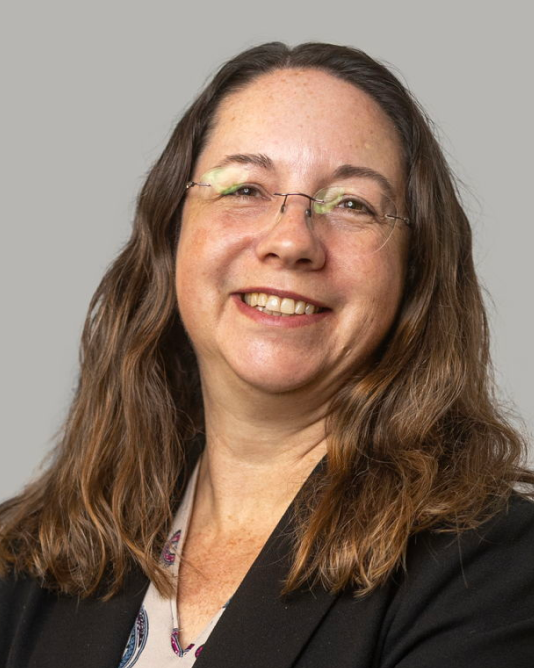
Most small firm owners I talk to are chasing revenue. We watch the top line, celebrate when it moves, and then look up at year end wondering where the money went. I ran AMB Architects that way for the first seven years. Revenue was growing. Profit was essentially nonexistent.
The problem is the formula. Traditional accounting says Sales - Expenses = Profit. In practice, expenses expand to meet available revenue, and profit is always a leftover. I flipped that formula in 2016.
Profit first
Mike Michalowicz, in his book Profit First, reframes the formula: Sales - Profit = Expenses. You allocate profit first and operate on what remains. It's not a budgeting exercise — it's a mindset shift about how money flows through your firm.
AMB Architects is a 10-person commercial firm. In 2025 we hit $2.3 million in revenue and are operating at 32% profitability, with a cash reserve set aside for downturns. That happened because profit become the first thing I account for, not the last.
One action from this article: read Proft First. Start with the basic format and grow into it. The mindset shift is immediate. The results follow.
Scope creep is a profitability problem
The second place small firms lose profit is scope creep. We sell time and expertise. Every hour outside the contracted scope, without an additional fee, is profit walking out the door. The root of this problem is cultural: Team members don't want to ask clients for more money. They feel like used car salespeople. That discomfort will cost you profitability every year if you don't address it.
We solved it two ways. First, we restructured our agreements to list optional services at the bottom with fees already attached. No on-the-spot negotiation needed — team members can simply say: "That's an optional service. The fee is already in our agreement. Are you ready to move forward?"
Second, we trained on this in group and individual settings until it became part of our culture. The script is simple: "I'm happy to help with this. It's not in the original scope, and I'll provide a fee before we start." Train your team to say that with confidence.
Coming next: The AI CFO
Small firms don't have CFOs or HR directors. I've started building AI employees — role-specific tools loaded with firm knowledge — that I consult the way a larger firm would consult a department head. My AI CFO helps with financial analysis, planning, and benchmarking. A full article on this approach is forthcoming.
The bottom line
Implement this concept about profit first. Restructure your agreements. Train your team. 32% profitability is not reserved for large firms — it's available to any small firm owner willing to change the way they think about money.
Part 3: Balancing firm financial stability with practice growth goals
By Joshua Zinder, AIA, LEED AP
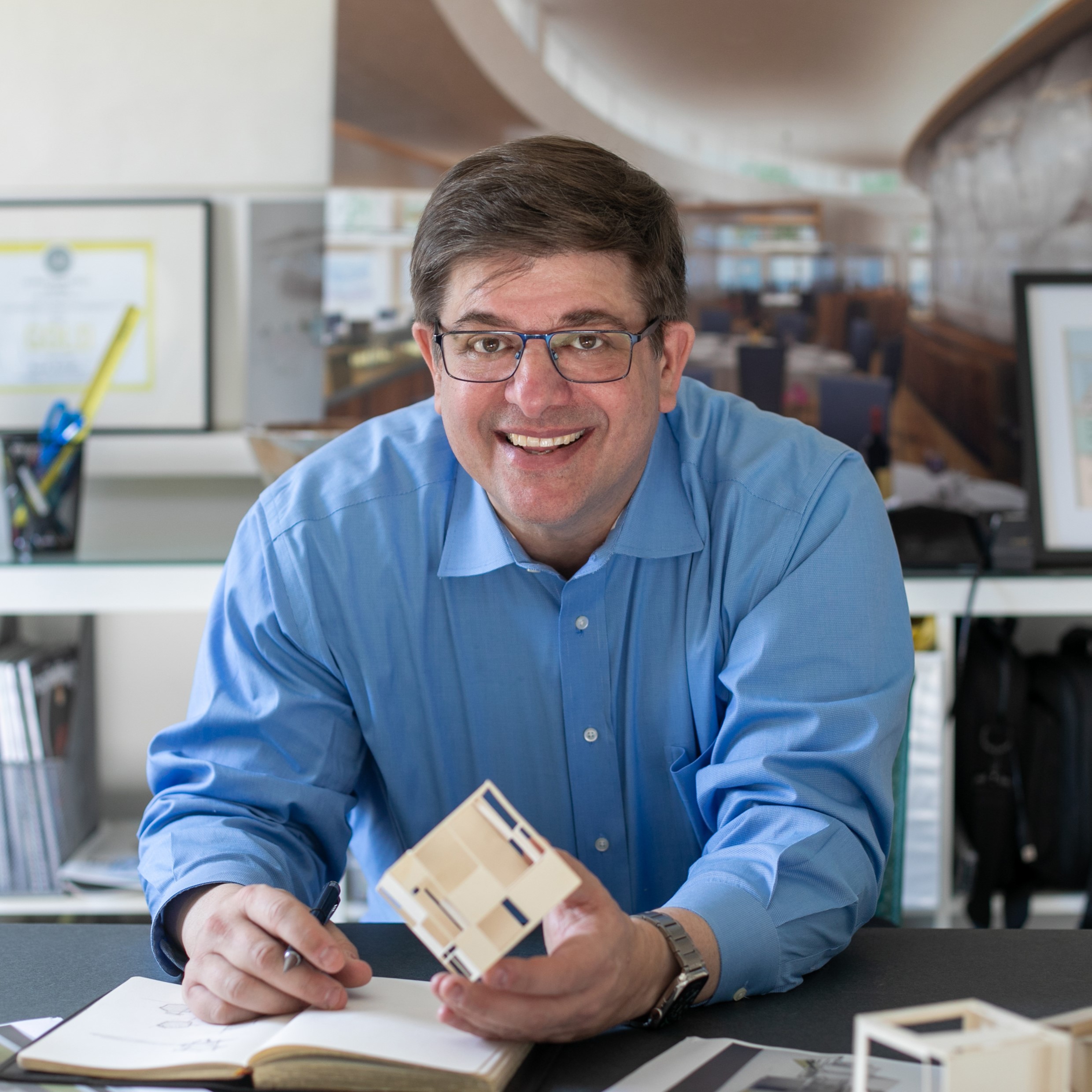
As managing partner of a small firm that has always prioritized financial and operational stability, I can attest that a thriving practice, profitability, and design success are all achievable if principals think and act strategically. Over 20 years, our practice has given more than 90 employees a place to develop their skills and shape their careers.
That said, as my colleague Darguin Fortuna, AIA notes, architecture school does little to prepare you for starting, managing, and growing a practice. I'd encourage anyone on an entrepreneurial path to take business classes during off hours — otherwise, you'll learn the hard way. Every business mistake you learn from completes another lesson. Here are a few I've gathered along the way.
Weatherproof your practice — diversify!
As with an investment portfolio, diversity promotes financial stability. Pursuing projects across a wide variety of typologies helps ensure that no single disruptive event or economic downturn puts your firm at serious risk. If you specialize in boutique hotels, for example, a recession, rising interest rates, or a pandemic could cause developers and investors to pause projects indefinitely — leaving you with little new work or revenue to sustain the firm.
Working across sectors also fosters cross-pollination of ideas, methods, and strategies, making your team nimbler and more innovative, and delivering better outcomes for clients.
Get the projects you want — parallel practice
Many clients struggle to understand the value of a generalist practice and instead seek architects who specialize in a sector relevant to their needs. Once your firm is on stable financial and operational footing, it becomes easier to shift resources toward a specialization you've long envisioned.
With an established practice as a foundation, I explored launching a second firm or developing a new brand. Ultimately, by partnering with another architect with expertise in our targeted specialization, we formed a DBA - an entity "doing business as" another name under my existing business structure. To the public, it appears as a distinct firm with its own reputation and expertise. By partnering with an established specialist, we were able to leverage his portfolio alongside my firm's team and resources to pursue projects that offer us greater creative freedom and deeper meaning.
Stabilize your practice — pursue development
Architects with successful firms often have limited opportunity to build wealth, even as clients realize significant financial gains through the work we do. By investing in projects, architects can share in that long-term profitability. And by acting as lead developer, you can create a pipeline of steady work that helps navigate economic slowdowns while gaining creative control and the potential for lasting — even generational — wealth.
Because this is difficult to achieve on an architect's typical margins, it's worth considering becoming a developer of your own projects. Over time, our firm leveraged its networks and relationships to identify ideal investment opportunities, sometimes structuring fee arrangements that contributed to our overall investment stake.
When pursuing real estate development, focus on your local community or areas you know well. This approach allows you to:
- Identify opportunities for development projects that sustain the firm by filling gaps between traditional client-architect work.
- Attract financing and investors — your stake as a financial participant lends credibility and opens the door to incorporating AIA's Framework for Design Excellence into projects.
- Champion sustainable design that developers often resist, not seeing the bottom-line benefit. The resulting projects support occupants, become community assets, and deliver long-term value for investors.
Strategic thinking, diversification, and a willingness to evolve your practice model are what separate firms that merely survive from those that truly thrive.
About the AIA Small Firm Exchange
The AIA Small Firm Exchange (SFx) advances the mutual interests of architects practicing in small firms by 1) advocating for the value of small firms, the national SFx, and local SFx groups, both within the AIA and to the public; 2) curating and disseminating the most pertinent resources and information, from the AIA & elsewhere, that benefit small firms; 3) informing the AIA of current issues facing small firms and areas in which current resources/information are lacking. Check out their community online home at aia.org/sfx.
____________________________________
Darguin Fortuna, AIA, NCARB, NOMA is the Co-Founding Principal of Flow Design Architects, a residential-focused architecture firm based in Salem, Massachusetts, with an active international practice in the Dominican Republic. He has led more than 2,000 residential, multi-family, and mixed-use projects since founding the firm in 2017. Fortuna serves as Chair of the AIA Small Firm Exchange (SFx) and is the first Dominican-born recipient of the AIA Young Architect Award. He teaches at the Boston Architectural College, holds NCARB certification and licensure in multiple U.S. states, and maintains a YouTube channel with over 20,000 subscribers dedicated to transparency and education in the profession. He is a co-author of the forthcoming Immigrant Architects anthology and a certified HERS energy modeler.
Alyse Makarewicz, AIA is the founder and president of AMB Architects, a commercial architecture firm in Houston, Texas. She has created a company that is an HBJ Best Places to Work by fostering teamwork, professional growth, and a healthy and fun working environment. She has been active in her home chapter of AIA Houston, including having served as president. She currently serves on the Board of the AIA Small Firm Exchange.
Joshua Zinder, AIA, NCARB, LEED AP is founder and managing partner of JZA+D, and founder of Landau|Zinder Architecture. His portfolio, amassed over 30-plus years, includes office, hospitality, institutional, government, and mixed-use environments. Active in his community of Princeton, NJ, Zinder is a co-developer of multiple real estate properties. A past president of AIA New Jersey (2021) he currently serves on the Executive Board of the AIA National Small Firm Exchange and AIA Interfaith Design Knowledge Committee Board and supports AIA New Jersey as the Design Awards/DesignNite Co-chair and the AIA Central New Jersey component as a Trustee.
(Return to the cover of the June 2026 PM Digest)