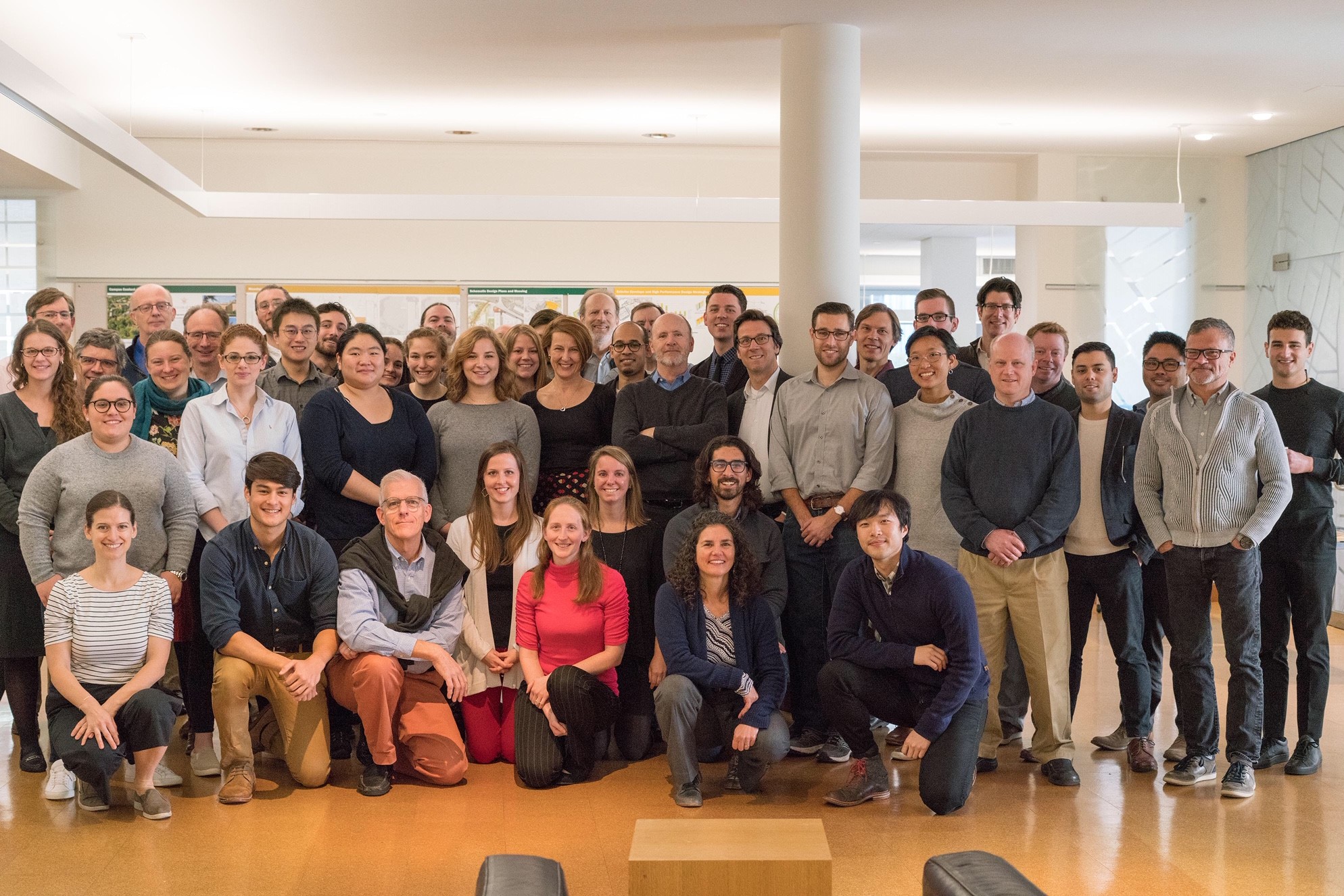
Goody Clancy became the first JUST organization in the city of Boston. Image: Goody Clancy
By Randolph Meiklejohn, AIA
In mid-2018, design and planning firm Goody Clancy became the first JUST organization in the city of Boston, and what had begun as a research and policy-writing project came out into the open in our workplace, as we started learning together how to be a better company. Developed by the International Living Future Institute, the JUST program focuses on social equity and employee engagement, and it invites an organization to self-assess and to share data on twenty-two metrics. Goody Clancy’s “JUST label”—think nutrition label—now appears on the ILFI website, with an expandable display of information about our policies and performance in employee compensation, diversity, benefits, safety, local community engagement, and more. For me as a firm leader, JUST represented an opportunity to test my belief that Goody Clancy is a good place to work. Well, how good? According to whom, or to what standard? Both for our employees and our external contacts (clients, collaborators, prospective employees), maybe any conversation about our firm’s culture and character would be more meaningful if it invited questions from the outside and answered them with actual data. With measurable data, would we strive for “a good score”? Not really, because in JUST it’s more about the questions than about the yardstick.
Now in fall 2018, Goody Clancy has moved on to what we see as the next logical step, which is to work with our employees on understanding what they believe will make us a better company. Here is where the JUST framework becomes a remarkable tool for discovering priorities in employee engagement, because the label, with its twenty-two topic headings, is a discussion-starter. Our September roundtable meeting began with questions about the label (why do we have only one star for “Union Friendly”?) and then quickly moved to a broader conversation about metrics of deeper interest. Priorities that emerged include requests for more information transparency (about compensation, and about outcomes for men and women) and for reviewing policies that benefit employees, such as continuing education, health insurance, paid leave and workplace flexibility. As with every new initiative, it’s a challenge to continue our transition to JUST along with everything else we do, but the learning is energizing, and the increasing transparency is real, and we’re glad to be part of something bigger than ourselves.
Randolph Meiklejohn, AIA, is a Principal and Director of Operations of Goody Clancy in Boston.