
How DPR’s Living Labs are pioneering net-zero energy building certification
by Yumi Clevenger, DPR Construction
In the ever-evolving sustainable design and construction arena, many owners and project teams are setting their sights on a goal that seemed improbable just a short time ago: creating commercial buildings that produce as much or more energy as they consume each year, known as net-zero energy buildings.
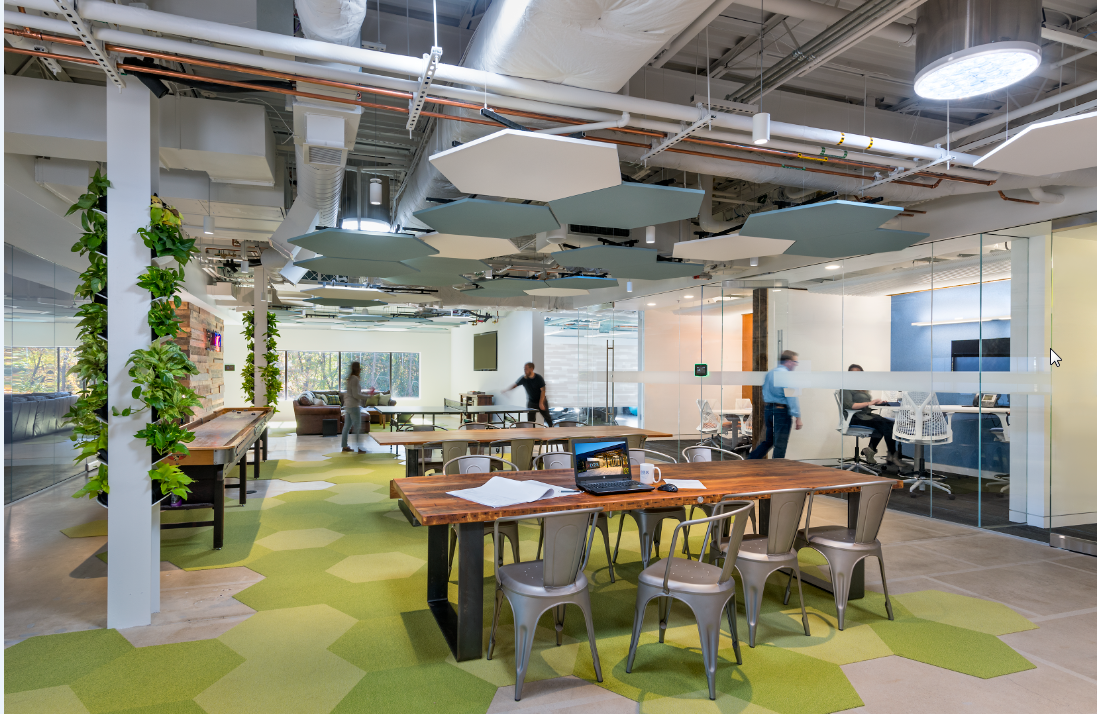
In total, DPR has built four International Living Future Institute (ILFI) net-zero certified projects—the David and Lucile Packard Foundation corporate headquarters, as well as three award-winning net-zero DPR offices in Phoenix, San Francisco, and San Diego. DPR’s Reston, Virginia office, which opened in July 2016, is currently targeting net-zero energy certification. These DPR offices are prime examples of how the company is helping to pioneer a movement that many expect will ultimately make net-zero energy the “new norm” in sustainable design and construction. More than just offices, these buildings serve as living laboratories that showcase the latest in sustainable concepts in a variety of regions and climates.
The Reston, Virginia office has been the most challenging NZE project of the four due to the Mid-Atlantic climate. Rather than building new, DPR chose to renovate the 20,000 SF space, which had been vacant for more than seven years. This decision emphasizes DPR’s commitment to environmental responsibility and to moving the industry forward, showcasing how a Class-C office space with an average skin system can become a net-zero, Class-A office in this region.
Lessons Learned
As we continue our pursuit of NZE certification in all our offices, we have many lessons learned. We’ve learned that net-zero performance can be achieved without going over budget and that design, construction, and operation issues are ultimately caused or solved in the non-technical sphere. Every 20 to 30 years, a building and its systems need a renovation and refresh, which is an ideal time to examine net-zero energy as an option. Here are our lessons learned:
- Design Assist and Collaboration—When designing in a vacuum, engineers are unaware of real-time cost implications. Rapid pricing feedback coupled with analysis of decisions assists in high-performance building design without added cost.
- Evaluate Your Structure First—One of the largest costs associated with net zero is upgrades to the roof. This step is at the “go/no go” stage of decision making.
- Cost of Solar—With the price of solar dropping dramatically over the last five years, it isn’t necessarily cost-effective to “over-design” for energy efficiency. In many locations, projects can get to NZE by simply adding PVs to the roof.
- Energy Metering—Prices continue to drop for metering; however, it’s hard to justify detailed metering when the energy bill is negative. “Insurance” PV can offset energy issues and be less expensive than traditional metering fees. Limit metering to just major loads (panels) and major equipment—skip the printers and kitchen equipment- and make sure data is easy to access and monitor.
- Cutting Shelf Technology—LEDs, VRF, DOAS and other simple off-the-shelf systems reduce the complexity of the building, reducing maintenance.
- BMS—On smaller projects, design teams should consider specifying equipment with onboard controllers, instead of being fully controlled by the main BMS, to reduce system complexity and cost.
We employed several strategies to reduce our energy usage and increase energy production including:
- HVAC—After deep cost and function analysis, we chose a four pipe DOAS system to reduce energy loads as much as possible, while keeping the ability to heat and cool different areas simultaneously. For example, in the winter we can heat most of the office but cool the training room if there are a lot of people gathered.
- Radiant sails—In select rooms, DPR used Radiant Sails, a system which transforms the centuries-old technology of radiant heating and cooling into a modern architectural element that is an extremely energy efficient way to provide thermal comfort to its occupants.
- Natural daylight—The entire 20,000 SF area is illuminated by 24 SolaTubes, a modern glorified skylight, that allows a tremendous amount of natural daylight in, which reduces the energy required for lighting.
- Lighting controls—The LED lighting system, combined with a robust control, automation, and sensor system (donated by Watt Stopper) provides a consistent level of lighting throughout the day while maximizing energy savings. In addition, power outlets use a phantom load-reducing system that eliminates all loads from not in use after 8 pm.
- Photovoltaic system—A rooftop 147 solar array is designed to include 10% more energy than will be required to achieve a net-zero certification through the ILFI program. The Sun Power Helix photovoltaic system will be one of the first of its kind on the East Coast.
- Water efficiency—A highly efficient rooftop solar hot water system provides hot water for all domestic uses. DPR partnered with Sloan to provide extremely water efficient fixtures in the restroom and shower facilities.
- Materials—All finish materials in the space (carpet, wall coverings, tiles, etc.) are certified as Cradle to Cradle. The most notable architectural element throughout the space is the reclaimed wood taken from barns in Connecticut and the eastern shore of Maryland and installed by our own self-perform carpenters.
- Connection to the outdoors—Adjacent to the kitchen, there is a garage door that can be opened for employees to take a break and get some fresh air, or let the fresh air in. The door is tied into a LED , programmed to let employees know if the outside weather conditions are acceptable to keep the door open.
As we evolve as a society, so does our built environment. Building NZE offices now realistically attainable from design, construction, budget and total cost of ownership perspectives. DPR’s four living labs not only showcase the latest sustainable concepts in a variety of regions and but offer the unique opportunity for DPR to study and experiment with what makes the buildings most efficient over time. Leading the way in sustainability and pioneering the net-zero movement, DPR hopes to continue sharing updates and lessons from our net-zero projects to show both industry peers and customers that net-zero construction is a viable option to both save money over time, as well as make a positive impact in our world. If you’d like a tour of our Reston office, email Jodi Paci at jodip@dpr.com.
|