By Kira Gould
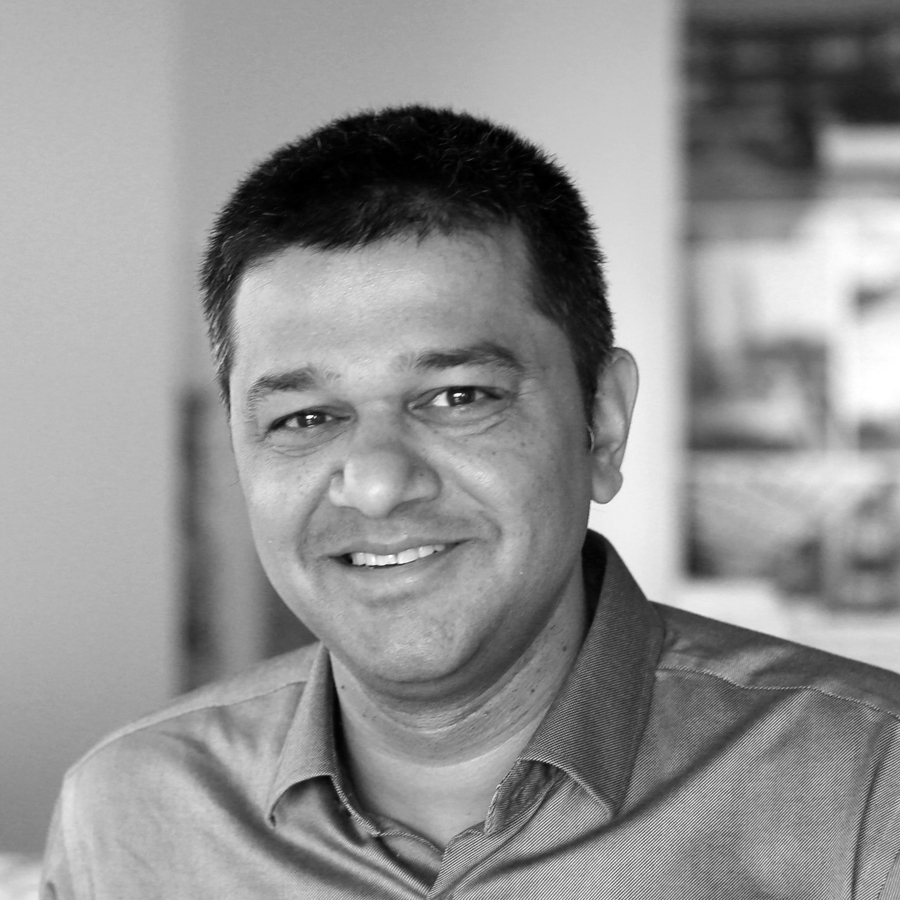 “Are your buildings survivable? Are your buildings joyful places?” These are the questions that Vikram Sami, AIA, LEED AP, every day. And every day, he insists that, as designers, “we have to lead with passive strategies.”
Sami, who is Director of Building Performance with Olson Kundig in Seattle, and is a new member of the AIA COTE Advisory Group this year, has nurtured an interest in passive design and architecture since school (undergrad at Academy of Architecture in Bombay and master’s degree at Arizona State University where he focused on building performance and simulation and experimentation) and throughout his career.
“ASU’s focus on simulation and experimentation was a good mix for me,” he says. “I got a good grounding in energy modeling.” That led him to a job at the ENSAR Group where he worked with the late Greg Franta, FAIA, as well as Victor Olgyay, FAIA, on projects all over the world. Such projects, like a massive decommissioning lab project, inspired such things as a rating system based on Malcolm Wells’s Wilderness Checklist.
When Sami wanted to get back onto the design side of things, he wound up at Lord Aeck Sargent in Atlanta, with whom he had worked while at ENSAR. That was a good fit, and Sami also engaged with AIA Atlanta’s (very active) COTE chapter, as well as with the Georgia Solar Energy Association, the local chapter of the American Solar Energy Society, which was advocating a renewable energy tax credit in Georgia (that passed).
Sami steps into a new role with AIA COTE this year. “I’ve always wanted to get involved with AIA COTE because of Greg [Franta], who was one of its driving forces,” he says. “I believe that it is the organization for architects around sustainable design leadership. LEED is great; it has changed the industry. The power of COTE is that it is by architects and it is fundamentally about design. It is about building performance but also about how design affects building performance. That’s why passive approaches are still--always--where I want to start.” Sami is engaged in the AIA COTE’s Top Ten Toolkit (in development) and the research and development group. “We can’t abdicate this to engineers,” Sami says.
For the past two years, Sami has been at Olson Kundig in Seattle. The firm is known for strong, place-based design. “There is also an ethos of making things that do more than one thing. That leads to efficiencies--and also joyful surprises, like the huge skylight in our office that runs off of city water pressure and is operable for thermal comfort.” Sami is helping the firm be more deliberate about tactics, methods, and measuring results (through post-occupancy evaluation and other measures).
“In the last several years, I have seen a growing understanding about thermal comfort and passive systems, which is encouraging. If we could guarantee comfort with passive systems, we’d never have to use conditioned air at all. But the big myth is that we can guarantee comfort with HVAC systems. You can guarantee control, but not comfort.”
Biophilic design is another interest of Sami’s, though he thinks that it’s being interpreted too narrowly, in many cases. “I see a lot of photographs of biophilic design where you are looking at things through . It begs the question of whether biophilia is visual or something more. To me, biophilia involves multiple senses.”
Kira Gould, Allied AIA, is principal of Kira Gould CONNECT, a communications consultancy to the AEC industry with a focus on sustainable design excellence, and diversity, equity, and inclusion.