“Prison reform in Central America through prison design: the practical vs. the ideal” seems a very promising session to be presented during the upcoming AAJ conference. The session will talk about how a region moves towards reforming its prison systems, while simultaneously facing many challenges including a lack of strategic planning, inadequate information collection and management systems to inform policy and programmatic decisions, as well as scarce human and financial resources. If not properly addressed, these challenges can distort official response, so that rather than serving prison reform, new prison projects could turn into a prison industrial complex expansion.
The theme will be treated through a panel including Ken Ricci who has devoted his 40-year career to the programming, planning and design of justice and correctional facilities throughout America, Marayca Lopez who serves as a senior corrections analyst and planner and Omar Kuri, an experienced architect with completed Justice projects in Mexico and Latin America. This group of experts will discuss the challenges faced by policy-makers and design professionals in Central America using as an example a recent correctional design project they completed in Costa Rica. The case study to be presented includes the design of six separate medium and low security correctional facilities to be located on five different sites in Costa Rica. The design of these new facilities housing a total of 2,304 inmates is focused on improving the possibilities for rehabilitation and reducing recidivism through the intensive use of education and industries programs. The unique challenges of designing six correctional facilities for Costa Rica on a tight budget and on an aggressive schedule will be presented including the use of natural ventilation vs. air conditioning, appropriate levels of technology and security, the use of local materials and adaptations specific to the traditional architecture of Costa Rica.
i had a chance to make a few questions to Marayca Lopez, who is a speaker within this Track Session Panel and a had a direct colaboration in this project as a planner:
VR: What was your contribution to the Costa Rica Project?
ML: I participated in the conceptualization (definition), planning and scheduling of Production Units, that is:
- Define the mission of these centers in accordance with the objectives of the project: emphasis on education, training, job training, work and technical attention of inmates for their rehabilitation; enforcement of imprisonment in decent and respectful conditions of human rights.
- Development of operational documents of Production Units: philosophy of Production Units, how they will work (from the point of view of the public, inmates, administrative staff and the prison police), and estimated number of personnel needed to operate these facilities, hours of operation of the different components, etc.
- Development of detailed space program that must have Production Units.
VR: What differences you have been detected in the way that a building of this type is planned in Latin America relative to other parts of the world?
ML:
- Cultural and social, which requires firstly, knowing and understanding how the country's prison system works for any new building to adapt to the cultural and social realities of the country, in order to make it a viable and sustainable project.
- Differences regarding to the final objective of the purpose of he sentence: rehabilitation, which implies that the inmate is deprived only of their freedom of movement, leaving intact the other rights that correspond to the state meet: right to work, to education, to receive visits, etc. (In the US, for example, most of the "rights" are invalidated to the inmates once they enter prison).
- Emphasis on the prison infrastructure proceeds in accordance to the list of international treaties ratified by Costa Rica (United Nations ILANUD, International Red Cross, etc., something that does not exist in the US).
- Differences in the number of square meters allocated per inmate (the ACA standards are very generous compared to those used in other countries).
- Differences regarding to human and financial resources.
VR: What might you consider as important to mention about this project over others?
ML: Most importantly, always take into consideration the social and economic reality of each country. Understanding the culture of each country and how it is reflected in the way of treatment of their inmates. It is also important to note that what works in one country does not necessarily work in another (one size does not fit all), and that each project has to be adapted to the particularities and needs of each country. There is no single model prison (i.e. The American model), but "best practices" that can be taken from here and there and to try to adjust them the best possible to other prison systems.
In particular, in Costa Rica, highlight the awareness that human rights are respected and provide the inmates a humane and decent treatment, as well as the services required for their release, inmates can return to society successfully. This humanitarian and humanizing aspect of the sentence, and its purpose of rehabilitation, it’s what I highlight of the project.
Also another speaker explained me and share with me the site plans of the "Unidades Productivas" ("Production Unit"), this facilities have the characteristic that the inmates are allowed if they signed a kind of good behavior agreement, in this facilities they will have greater freedom compared with others facilities in the country and they will able to spend most of the time being trained and working in the workshops. This is one of the goals of these facilities, making real reintegration of inmates to the community.
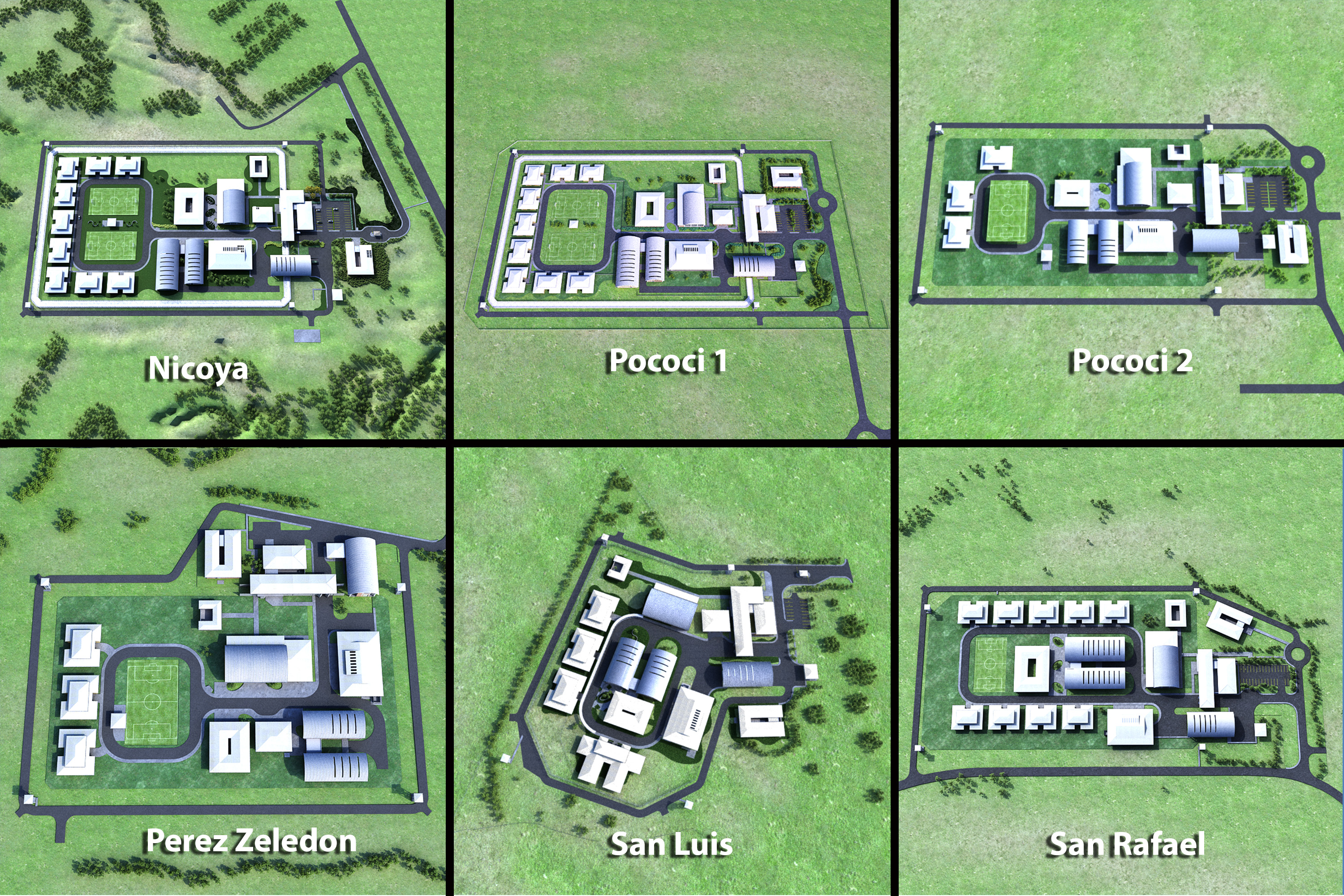 Six Sites of "Unidades Productivas" ("Production Units") at Costa Rica.
These facilities have all the same main concept, "Small town", the housing is located at the bottom, the service/program areas at the middle and the admin/security areas at the front. San Luis is the women facility (Medium Security), Pococi 2 is for young offenders (Medium Security) and San Rafael is for men (Minimum Security), the rest of them are Medium Security for men.
This is a rendering showing one of the six sites located in Costa Rica that integrate the challenge of planning and design in which the members of this team were involved.
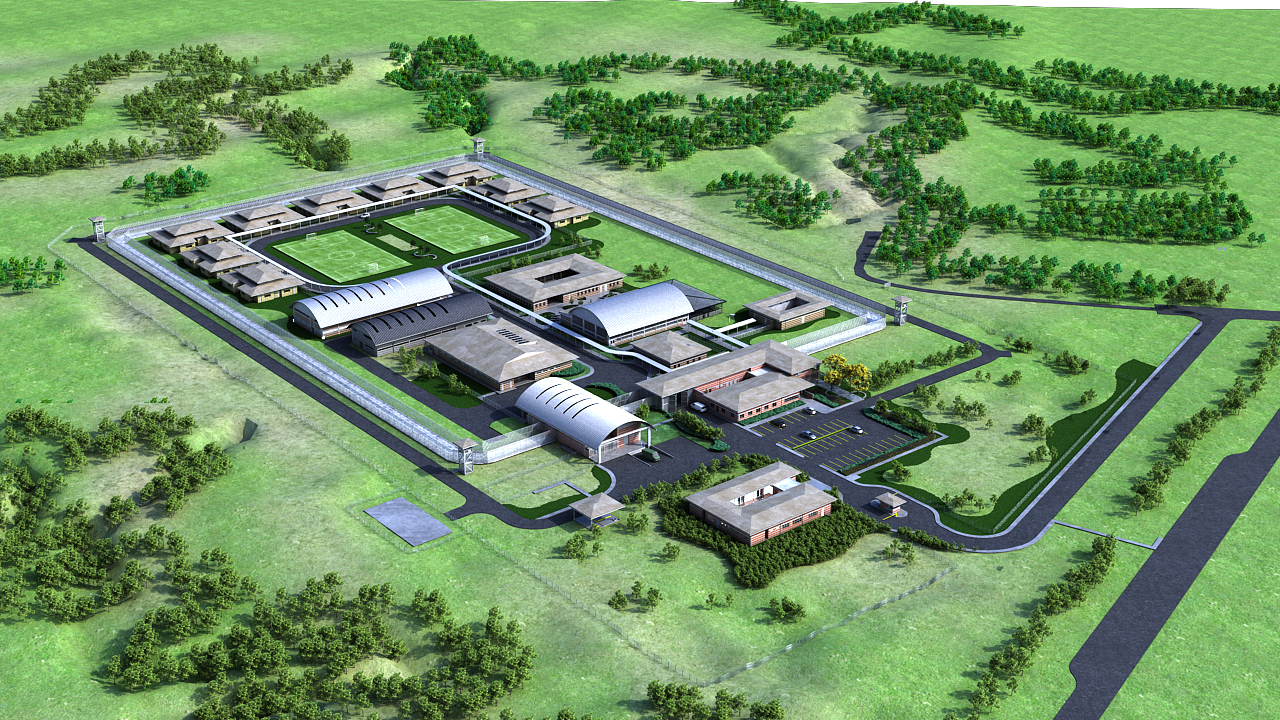
Nicoya Site
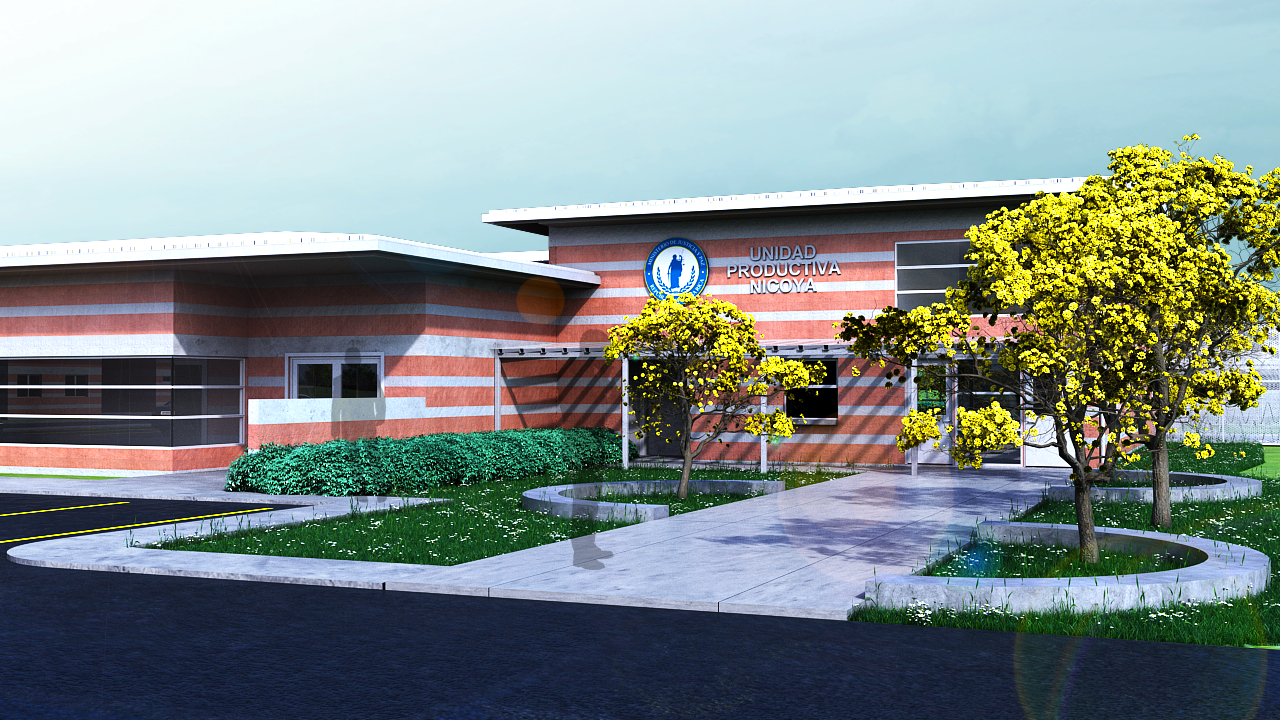
Acceso principal, "Administración / Acceso / Policia" ("Main Entrance, Admin/ Access / Police")
It seems that this presentation will be very interesting for the professionals who works on justice projects, to know how was the process, the long path through decisions and learning about the different traditions; there were many challenges to complete this kind of facilities in Latin America and we would be able to see how they overcome all of this and how they got the final design.
------------------------------
Thank you very much Marayca for taking the time for your answers.
#AcademyonArchitectureforJustice