By Marayca Lopez i Ferrer, Conference Chair

From Sunday, October 29 through Tuesday, October 31, the AAJ hosted its annual conference in the Queen City of the West: Cincinnati, Ohio. The conference was attended by approximately 200 people and its composition reflected the goal of the conference: gathering together professionals from the fields of planning, architecture, design, and a high-level array of academics, experts from other justice-related disciplines, and university students. This year’s conference was very rich in content, with the level and diversity of discussions providing an outstanding mix of subjects and a diverse set of speakers to debate and discuss the topic of interdisciplinary justice for the perspective of law enforcement, courts, and correctional facilities.
The conference provided a valuable forum for justice practitioners and experts to share knowledge and experience on the impact that good planning and design can have in optimizing and humanizing justice facilities—not just from an architectural point of view, but from the perspectives of sociology, psychology, statistics, law, and other perspectives.
This year’s conference set a platform for continued interdisciplinary cooperation as well as to start engaging with likeminded social justice disciplines with the goal of moving forward collaboratively for justice and fairness for all. It is my hope that everybody who attended the conference benefited from the diversity and expertise of the speakers, sessions, exhibitors, and informal dialogue.
Keynotes and track sessions
Keynote presentations included some of the finest educators, researchers and practitioners in the field. With their presence and topics, the guest speakers made this venue truly multidisciplinary, providing an opportunity for education and for exploring further avenues of collaboration with professionals and experts from other disciplines.
Chief Judge Jonathan Lippman spoke about his time serving as Chair of the Independent Commission on Criminal Justice and Incarceration Reform, tasked with studying the criminal justice system in New York City, with particular emphasis on Rikers Island. The Commission consisted of a highly multidisciplinary team, including justice regorm organizations, community groups, city officials, the judiciary, former prosecutors, the defense bar, academics, correctional representatives, advocacy groups, and business owners. Working together for over a year, they concluded that Rikers Island should be closed over a period of ten years. The report can be read here.
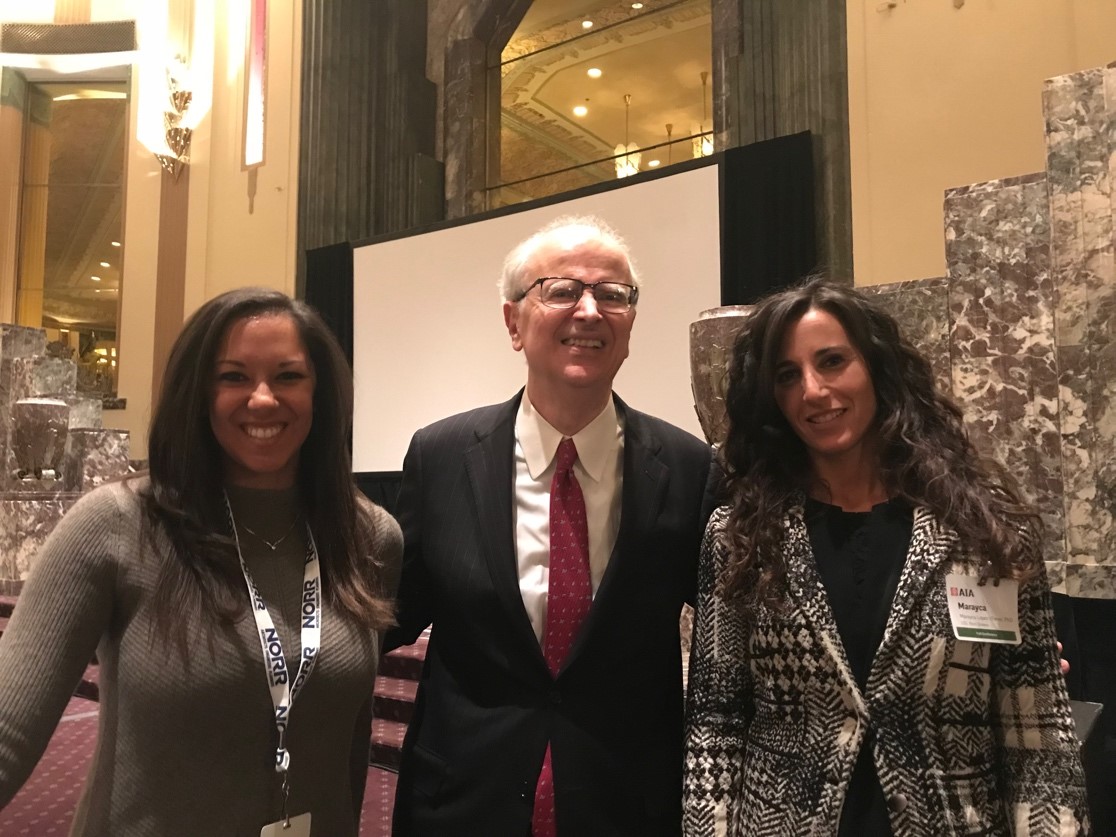
From Left: LG Conference Liaison Erin Persky; Chief Judge Jonathan Lippman; Conference Chair Marayca Lopez i Ferrer
|
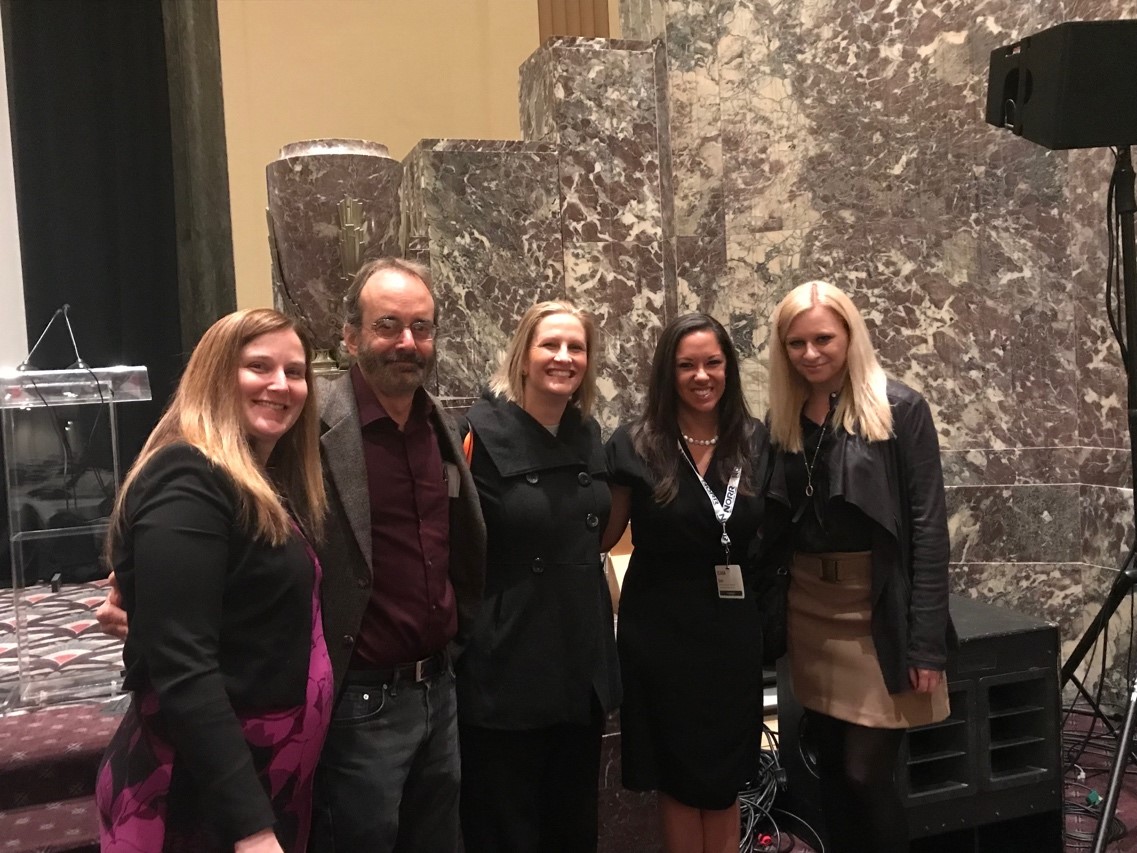
From Left: Dr. Paula Smith, Dr. John Wooldredge, Dr. Sarah Manchak, Erin Persky, and Dr. Valerie Anderson. Not pictured: Dr. Edward Latessa.
|
The Tuesday morning plenary session was led by five professors of Criminal Justice at the University of Cincinnati. Each professor is well-established and well-known for their justice research, with various foci in the field of corrections. Each presented findings from their research and theories of corrections based on their specific expertise, including the Risk-Needs-Responsivity Model, violence and victimization, juvenile offenders, female offenders, and mental illness and addiction. The applicability and importance of this research to our jobs as architects and planners cannot be overstated, and to hear it from the researchers themselves provided even more motivation to enhance our interdisciplinary collaborations.
Substantively, the tree tracks were rich in content and valuable toward creating a better understanding of the topical issues we face daily in our projects. With a good balance of building types and topics, the knowledge and applied research shared from some of the finest professionals in the field provided something for everyone in the field of justice architecture.
JFR Jury and AAJ Sustainability Committee
The selected award recipients across the three building-type categories were very well-balanced, with the selecting jury providing a very informative description regarding the scope, critiques and achievements of the selected projects. Each jury member’s level of knowledge about each project and candidness with regard to why things were selected (and why one might not be) was interesting and reassuring.
We can be certain that the projects highlighted in the Justice Facilities Review each year are true examples of great justice architecture. Each selected project was not only beautiful, but exemplified smart planning, and sustainable and humane design. I am looking forward to seeing a continued increase in the number of projects submitted and chosen to be honored in the Justice Facilities Review.

JFR Awards Presentation. From Left: Jury members David Clusiau, Daniel Redstone, Alfred Degrafinreid II, Rona Rothenberg, Jury Chair Michael LeBoeuf
|
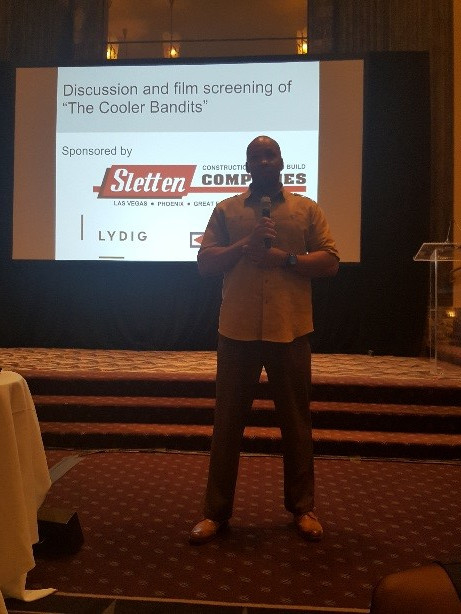
Donovan Harris discussing the documentary and his experience in and after prison.
|
The documentary film viewing of “The Cooler Bandits” by local filmmaker John Lucas, organized by the AAJ Sustainable Justice Committee, was very inspirational. Viewing of the documentary was followed by a very frank discussion with one of the main characters, Donovan Harris, on several important issues surrounding incarceration. I am sure the discussion helped all attendees to understand and appreciate other peoples’ firsthand experience with justice and prejudice, and the devastating consequences that mass incarceration can sometimes have on young people for making bad decisions that would mark and change their lives forever. Personally, it was very inspiring to see how three of the four protagonists were able to turn their lives around by using their time in prison productively and effectively, becoming educators and advocates for change.
Exhibitors’ Gallery
Conference sponsors and exhibitors were on hand throughout the day both in the display area and as a part of the meeting sessions, allowing participants to learn about new products and cutting-edge technology in the justice industry. This year’s intimate exhibitor space provided an opportunity to engage, meet with colleagues and friends, and to make some new contacts and develop new ties for professional growth.
Tours
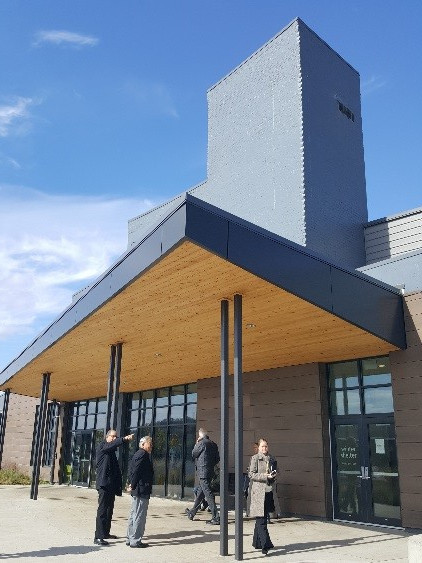
Photo: David and Rebecca Barron Center for Men.
Along with the exciting and informative plenaries and learning sessions, this year’s Conference featured visits to three of the most iconic justice buildings in and around Cincinnati: the Hamilton County Sheriff’s Department Drug Recovery Pod; the District 3 Police Headquarters building and a visit to the Shelter House: Barron Center for Men. I had the opportunity of touring the Shelter House and found the visit truly engaging, educational and inspiring. Similar to the positive outcomes of a well-designed correctional facility, I was grateful to experience the positive aspects of accommodating some of the most disenfranchised individuals in our communities in humanizing places.
Last, but not least, I would like to take this opportunity to express my gratitude for the invitation to Chair this year’s conference and would like to thank the AIA staff and the AAJ Leadership group members for an excellent and organized Conference. My heartfelt appreciation also goes out to all the participants and attendees for making this year’s Conference a great success.
___________________________________________________
Marayca Lopez i Ferrer is a Senior Corrections Analyst and Planner with CGL.
(Return to the cover of the 2017 AAJ Journal Q4 issue)