By the AAJ Communications Committee

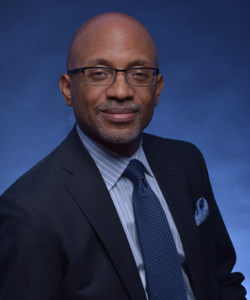
The theme of the conference is Interdisciplinary Justice. This goes beyond collaborative design with our traditional consulting teams and stakeholders. Could you explain this further?
ML: The field of justice is inherently a multidisciplinary one. Addressing justice reform issues requires expertise from several disciplines. As a former academic criminologist and penologist who has transitioned to an applied career in justice planning, I see many apparent links between the more scientific/social side of justice (and crime) and the practice of justice architecture. These links need to be explored if we want to make progress on the larger issues of justice reform.
AAJ is the perfect venue to explore these links and create the space for conversation across disciplines; a space to bring people working in different areas to share their expertise and to identify opportunities to collaborate on interrelated justice projects toward the goal of optimizing and humanizing the design of justice facilities.
Why is Interdisciplinary Justice important for practitioners as the industry moves towards Justice Reform?
ML: By virtue of our academic training and expertise in particular areas, different justice disciplines, such as criminology, psychology, sociology, law, public health, education, etc. have different ways of understanding and approaching otherwise interrelated issues. As the saying goes “Unity makes the strength”, and pulling together experts from various disciplines to collectively discuss and address the same justice-related problems we all face is a more robust approach than a “siloed” one in terms of accomplishing true justice reform. As part of an overall strategy to advance social justice, it is well established that interdisciplinary collaboration promotes diversity in thinking more likely to result in innovative and effective solutions than one dependent on a single perspective.
Nowadays, clients are more frequently requiring that justice architectural firms expand the expertise of their teams to include specialized consultants in the areas of criminology, mental health, management consulting, technology integration and medicine, just to name a few, to offer design solutions grounded in the same “human services” paradigm. For example, correctional facility designs now consistently integrate the findings from evidence-based research to aid in the rehabilitation of offenders.
In the civil and family justice arenas, easier access to legal information, social services programs and case files have substantially increased the incidence of self-representation in the courts, and legal practices have begun to shift away from traditional trial court adjudication to alternative forms of settlements and mediation. Interdisciplinary Justice also promotes the design of professional public safety services in partnership with human services and the community they serve.
How is organizing the conference in Cincinnati shaping the potential dialogue of the conference?
ML: By organizing the conference in Cincinnati, we intend to draw together advocates, academics, researchers, direct service providers and other individuals from a wide range of justice-related disciplines. Working right there, at the University of Cincinnati, is Edward Latessa, nationally recognized as “one of the most innovative people in criminal justice”.
To support each other’s work, we have partnered with Professor Latessa and other faculty members from the School of Criminal Justice from the University of Cincinnati. As a university town, the conference will give a voice to those students who wish to hear from and dialogue with justice leaders from multiple disciplines. Additionally, through the University Outreach Committee, we have partnered with Associate Dean Gregory A. Luhan from the University of Kentucky who, in collaboration with education professionals and other content experts, is leading a Juvenile Justice education studio project to be featured as part of the AAJ Conference.
Finally, one of the offered tours will involve a visit to the Hatton Center for Women and the Barron Center for Men. These are brand new shelter facilities built as part of the citywide effort to improve and expand the array of services offered to the homeless population, including spaces for case management, health and job training services, a full clinic, dedicated classroom space, a day center, laundry facilities and a cafeteria.
Research shows that individuals without stable housing are at greater risk for incarceration than the general population. Given the relationship between homelessness and incarceration, projects like these shelter houses can be viewed as an example of a collaborative initiative in providing supportive housing that helps “at-risk” individuals move to permanent houses.
Can you tell us a bit about the track Chairs that will be organizing the Courts, Detention/Corrections and Law Enforcement Sessions?
ML: For this conference we have carefully selected our track chairs based on their areas of expertise and track record of commitment to the mission and vision of the AAJ.
With a background in urban and facility planning and 30 years of experience focused on justice planning, Robert Fisch from CGL will lead the Courts Track. With thirty years of experience, he has contributed to more than 50 court projects, including planning, programming and project definition, Mr. Fisch is a nationally recognized expert on court facilities design best practices and operations. Mr. Fisch is a member of the National Association for Court Management (NACM) and a certified planner by the American Planning Association. Mr. Fisch is a noted speaker on civic planning, design, and operations at conferences across the U.S. and abroad, and has over 15 years of involvement with the AAJ (attending and presenting at annual conferences).
Gary Retel, AIA from DLR Group’s Justice+Civic national team will lead the Detention/Corrections Track. he is nationally recognized as an influential detention and corrections design expert. With thirty years of experience, he has contributed to more than 200 criminal justice projects. His work has met public needs for juvenile facilities, county detention facilities, correctional facilities and medical/behavioral health/special needs facilities for municipal, county, state and federal government clients. He is committed to evidence based practices with the goal of rehabilitation and the reduction of recidivism. He has been a long-time member of AAJ and has spoken on a national level on a variety of justice design topics and has been recognized and awarded for excellence in his work. He is a key member of.
Amanda Chebalo, AIA from AECOM is an emerging architect specializing in public safety facilities in AECOM’s national Justice Studio. She graduated from Savannah College of Art and Design with a Masters in Architecture degree in 2004 and was inducted into the Tao Sigma Delta honor society. Her professional experience focuses on mission critical facilities including law enforcement, communication centers, and emergency operations centers. Her lengthy body of work includes numerous collaborations with other architects and engineers on various state and local government projects. Amanda’s design background allows her to approach architecture holistically, creating aesthetically pleasing environments that seamlessly address building security, flexibility, functionality, and efficiency.
What do you hope will be the biggest take away or issue to consider for the attendees once the conference is underway?
ML: With a consensus for strong, interdisciplinary collaboration, we hope to bring new faces and voices to the table to dialogue and identify opportunities for collaboration as we move forward toward a more inclusive approach to justice reform.
JD: Given the times that we are in right now, the take away for the attendees is that of understanding. By that we mean that it is easy to get caught up in your own silo as to how you see the world and how it should work. Hopefully this conference will bring to light the need to be inclusive no matter what your discipline is as long as we all have the same goals towards a better justice system.
___________________________________________________
(Return to the cover of the 2017 AAJ Journal Q2 issue)