The availability and affordability of housing in American communities of all scales and types has continued to worsen in recent years, taking shape as a defining national issue that is impacting social and economic viability. On October 21, 2025, 8 advisory group members of the AIA Housing and Community Development Knowledge Community (HCD) joined leaders at the AIA Housing Summit in Washington, DC, hosted by AIA President Evelyn Lee. The Summit brought together AIA National Leadership, senior leaders from approximately 20 national housing organizations, volunteer leaders, and AIA staff to advance coordinated housing advocacy and action within the AIA and beyond.

2025 AIA President Evelyn Lee with HCD Advisory Group members and AIA staff & leadership. Photo credit: AIA
The Housing Summit in Context
National attention to housing policy has intensified with the Renewing Opportunity in the American Dream to Housing Bill (also known as the ROAD to Housing Bill), which recently passed in the U.S. Senate and is now under consideration in the U.S. House of Representatives. The comprehensive legislation incorporates more than 40 policy provisions aimed at expanding affordable housing, streamlining construction funding, and promoting zoning and land use reform at the local and state level – with several sections specifically advancing architect-led quality design and community-based solutions. In tandem, the AIA Strategic Council is preparing to set its 2026 housing-focused objectives, recommending that the AIA board establish housing as a top organizational priority.
The perspectives and outcomes from the Housing Summit will inform this work, alongside another initiative led by President Evelyn Lee earlier this year—the United States Conference of Mayors–AIA Joint Meeting and Survey, the findings of which are detailed in the USCM-AIA National Housing Survey Report.
To further inform its strategic housing goals, the AIA is encouraging members to share their views by the end of the year via the ongoing AIA 2026 Issues Survey on Housing, which is being administered by AIA Government Affairs and Public Policy. Members are invited to participate, as there is still time to contribute and help shape the future direction of AIA’s housing advocacy.
AIA Housing and Community Development (HCD) Leadership and Impact
Formed in 2011 and with more than 15,000 members worldwide, the HCD is one of the largest and most active Knowledge Communities within the AIA. The group serves as a national network of architects and allied professionals dedicated to advancing equity, design excellence, and sustainable communities through the following strategic focus areas:
-
Promoting design excellence through its national Awards program
-
Advancing professional education through its long-standing monthly webinar series
-
Advocating for housing as a fundamental right through the Right to Housing Working Group (established in 2021)
-
Contributing to national policy discussions through the AIA Government Advocacy Committee
-
Furthering pedagogy through the Housing Education Award partnership with ACSA
-
Engaging in UN Habitat
HCD had a strong presence and role at the Housing Summit, engaging in meaningful dialogue with national leaders to advance collective action and foster a unified housing strategy.
Before the Housing Summit, an internal Housing Strategy Workshop was convened in the morning to align AIA efforts across member groups, Knowledge Communities, and leadership. This session aimed to strengthen coordination, share insights, and inform future AIA policy and member engagement on housing.
Casius Pealer, an architect and attorney with the Institute of Market Transformation, and a longtime HCD leader, presented HCD’s strategic focus areas and accomplishments, building upon a foundational 2017 AIA member resolution that asserted access to housing as a human right—a stance that continues to shape HCD’s advocacy, research, and partnerships. “People need air, water, food, and housing to live,” he said, emphasizing that it is not just any housing but adequate housing, as defined by UN-Habitat’s seven Key Elements of the Right to Adequate Housing under human rights law. Pealer highlighted one of these elements – “security of tenure”—noting the significant mental health impacts associated with fear of risk of eviction. “As a Knowledge Community, we view housing as a human right, in contrast to the prevailing view of housing as a commodity in our country.”

Casius Pealer, HCD, Director of Market Development at the Institute of Market Transformation. Photo credit: AIA
Pealer provided an overview of HCD’s advocacy and engagement efforts over the past decade, highlighting, among other initiatives, a recent five-part podcast series produced in collaboration with the National Low Income Housing Coalition’s Opportunity Starts at Home Campaign, as well as the group’s global reach through participation in six United Nations housing events including World Urban Forum conferences (the most recent held in Cairo in 2024).
Kathleen Lane, AIA’s Managing Director of Climate Action and Design Excellence, spotlighted the crucial intersection of climate resilience and housing equity: “The housing crisis and climate crisis are intertwined—those most affected by the housing crisis are often the most vulnerable to climate change.”
Representatives from AIA’s Government Affairs and Public Policy team, including Matt Toddy, Chair of the Government Advocacy Committee, and Brittany Meyer, Senior Director of Public Policy, shared current housing policy advocacy initiatives, emphasizing the ROAD to Housing Bill as a major platform for AIA’s legislative advocacy - this AIA article outlines the key parts of the bill the organization views as most impactful. In closing, Michele Russo, Vice President of Research, provided data-driven insights on housing market trends and economic factors shaping both national and local housing demand. The session reinforced the importance of coordinated action across AIA components and the role of architects in shaping equitable and sustainable housing solutions.
The AIA Housing Summit
Building on the internal alignment, the Housing Summit gathered national leaders to foster collaboration. The event convened senior leaders from a range of national housing organizations, many local to Washington, DC, for a policy-focused dialogue centered on identifying opportunities for shared action.
Matthew Murphy, Executive Director of the New York University Furman Center, characterized the current housing market as “stuck,” identifying three overarching economic drivers contributing to the crisis in our housing system (each with many underlying factors):
-
home prices have increased dramatically—at twice the rate of inflation and far outpacing income growth;
-
new housing supply lags far behind market demand; and
-
elevated interest rates have discouraged homeowner mobility, reducing inventory and compounding the existing supply shortfalls.
Looking ahead, Murphy pointed to a host of measures to help “unstick” the housing market: local zoning and process changes such as upzoning, legalizing gentle density and ADUs, infill, office-to-residential conversions, and parking and permitting reforms, citing examples from Minneapolis, Sacramento, and New York City’s “City of Yes for Housing Opportunity.” He emphasized housing element laws in states such as California, Arizona, and Connecticut that require cities to plan and zone for housing at all income levels; “pro-housing” financial incentives for localities in Colorado, Maine, and Maryland; as well as comprehensive federal efforts like the ROAD to Housing Act.
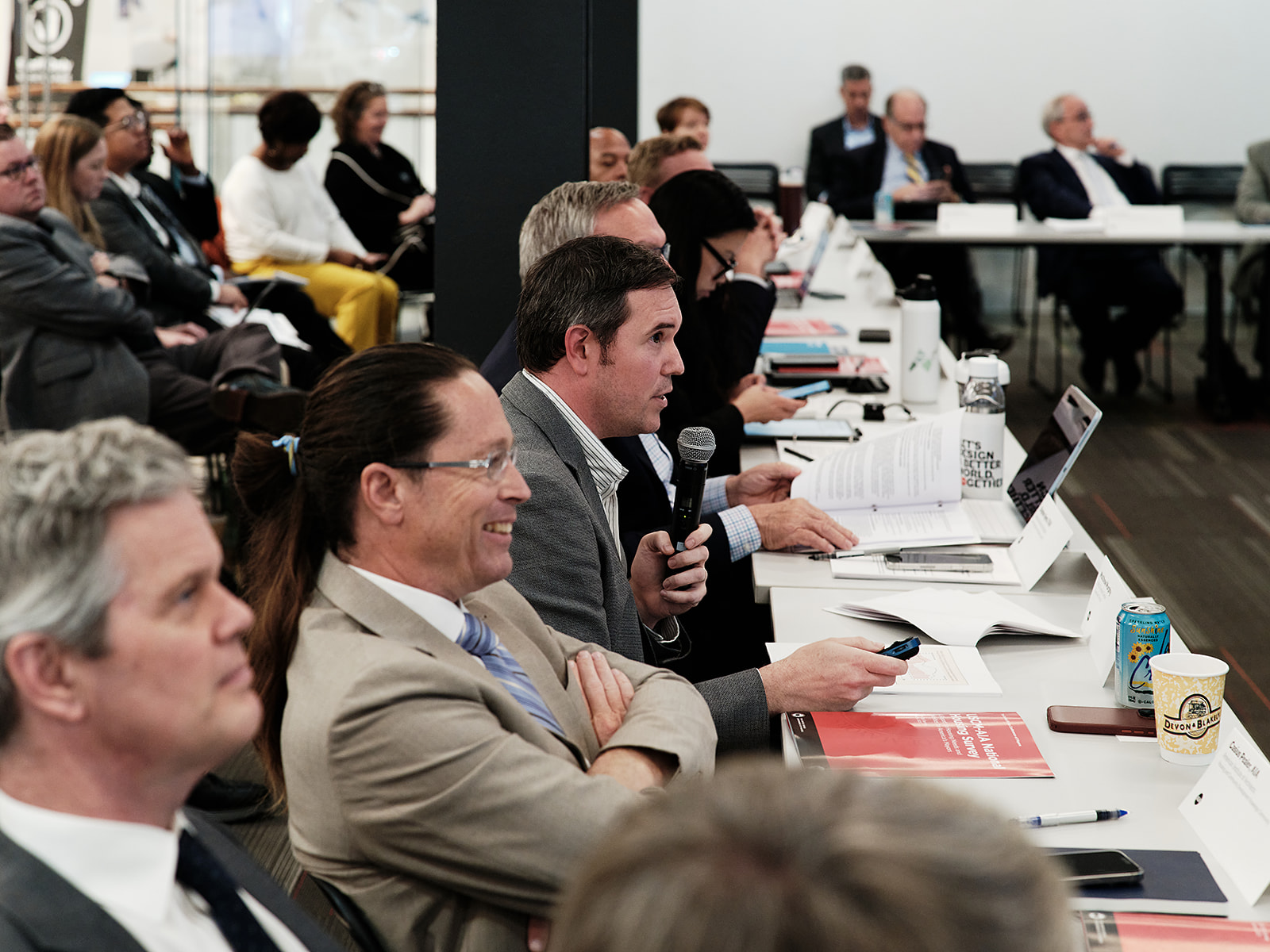
Speaker Matthew Murphy, Executive Director of the New York University Furman Center. Photo credit: AIA
Murphy emphasized the pivotal role architects can play in advocacy and advancing solutions to the nation’s housing crisis. He stated, “When architects become partners in policymaking, it brings unique credibility to the conversation. [Architects] can help visualize zoning possibilities, understand human impact, and create feasible housing models based on community needs and market realities. Architects can help visualize reforms to dispel fears.” This sentiment was echoed throughout the session, with multiple speakers affirming that architects have a unique capacity to help communities move beyond common misconceptions such as those about density.
Libby O’Neill of the National Low Income Housing Coalition (NLIHC) emphasized the critical importance of focusing affordability advocacy on households earning at or below 30% of Area Median Income (AMI), a position that aligns closely with HCD’s policy priorities to allocate resources toward securing the Right to Housing for the most vulnerable populations. O’Neill highlighted that this demographic is the most likely to experience severe cost burdens and be at risk for homelessness. She also referenced the annual GAP report published by NLIHC, which offers a rigorous analysis of affordable housing availability for extremely low-income households and illustrates the urgent severity of their housing needs.
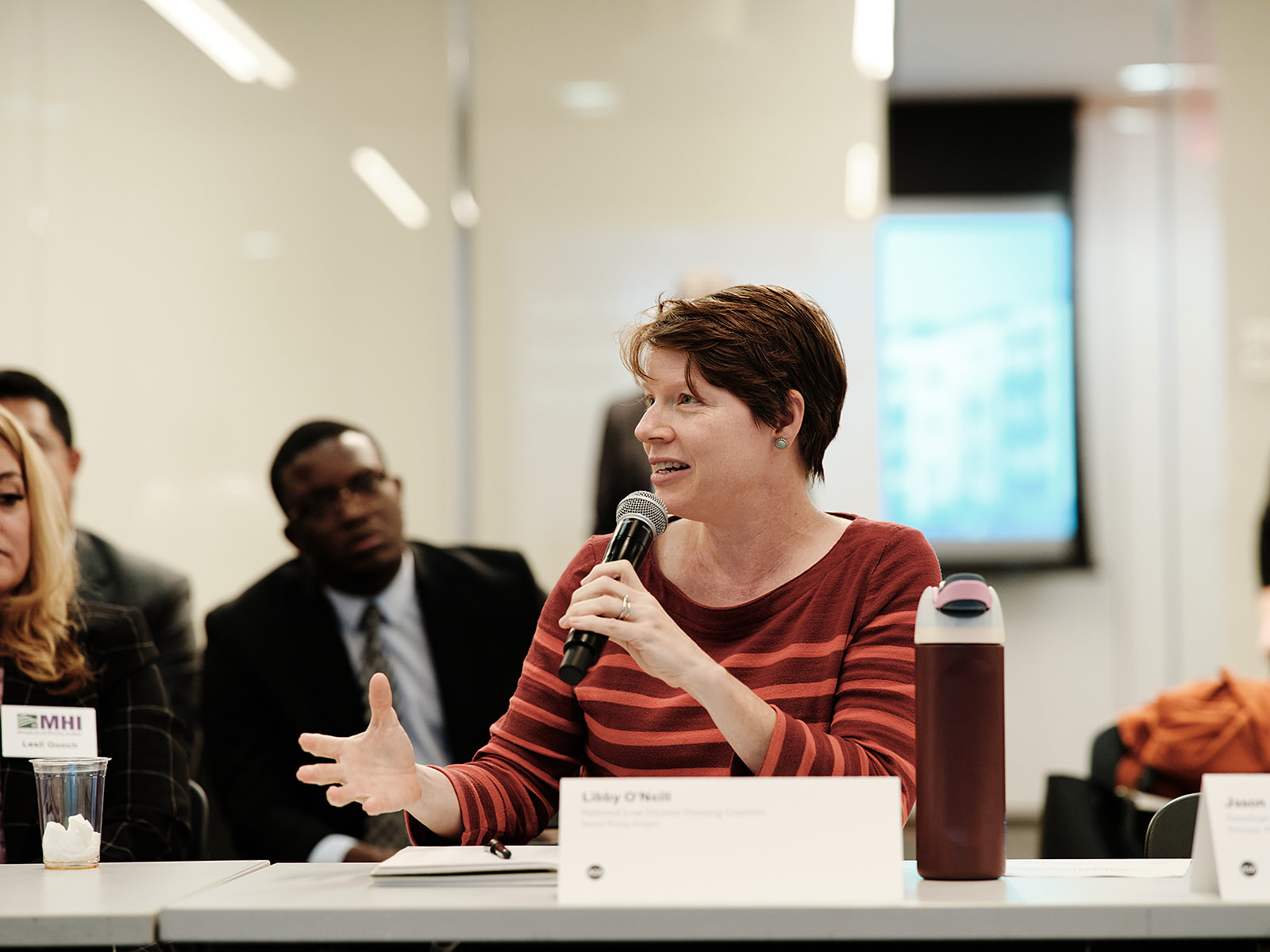
Libby O’Neill of the National Low Income Housing Coalition (NLIHC). Photo credit: AIA
Next Steps
The discussions surfaced best practices from across the nation, underscoring the value of cross-sector collaboration to address housing affordability, design standards, and community resilience. A consistent message emerged from participants: we must support the ROAD to Housing Bill – Congress’ first major bipartisan legislative package in decades focused on housing supply and widely supported by national housing advocates – and otherwise the most impactful advocacy and progress at this moment will occur at the local level, especially through zoning reform. Building robust networks, nurturing partnerships, and unified messaging will be foundational to future success, particularly in a climate of uncertainty.
Dave Gatton of the U.S. Conference of Mayors emphasized the urgency of this moment, stating, “For the first time in a long time, housing is a national issue. As a group, we have to take advantage of that.”
HCD will continue to work with AIA Leadership to advance housing in 2026 including collaboration on policy, research, and education.
How To Get Involved
-
AIA members who are interested in getting involved with housing advocacy should be encouraged to go to the AIA’s ROAD action center to contact your members of Congress about the pressing need to push this legislation forward.
-
AIA members who are interested in getting further connected to a range of national advocacy, including affordable housing can also visit the AIA Government Affairs & Public Policy website.
-
Consider joining the AIA Leadership Summit 2026 in February and participate in the annual Hill Day, where hundreds of architects will go to Capitol Hill to advocate for affordable housing.
-
To stay apprised of housing advocacy issues HCD is involved with or leading webinars on, AIA members can join HCD by going to your AIA member profile, navigating to ‘My Communities and Member Groups’ and checking the box for Housing and Community Development (HCD). You will then be added as a member and receive email newsletters from HCD which include information on how to tune into the monthly webinar series.
-
There are a number of ways AIA members can get involved in local housing advocacy: by joining chapter advocacy or housing committees; working with local officials on policy; running for elected positions that affect policy; serving on Zoning commissions and boards; providing testimony to local officials when legislation is open for comment; and partnering with community groups on housing initiatives. Much advocacy happens through city or state AIA components, which connect design expertise to zoning, code, and funding decisions that shape housing.