Urban Design Matters: What We Heard in New York
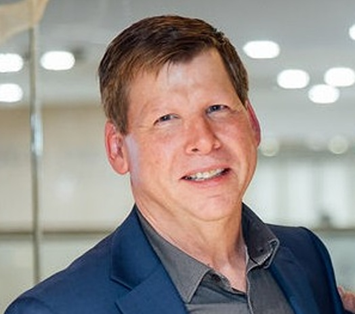
Peter Darby, AIA
Chair, AIA Regional & Urban Design Committee
October gives us an opportunity both to reflect on an extraordinary few days for RUDC in New York and to continue looking forward. Earlier this month, the 2026 AIA RUDC Symposium brought our national urban design conversation together as a central part of the ACSA Intersections Research Conference: Urban Design Matters. In this issue, I offer some initial reflections on what we heard in New York, accompanied by a separate feature article that takes a deeper look at our five RUDC sessions and twenty presenters.
We also continue our monthly RUDC Leadership Insight series with Danielle DiLeo Kim, AIA, explore a new group of Articles of Interest, and look ahead to our upcoming AIAU seminar and the continued growth of the National RUDC Network. Together, they reflect the broader conversation RUDC has been advancing throughout this year: why urban design matters—and what role architects, urban designers, and allied professionals can play in shaping better outcomes for our cities and communities.
2026 RUDC Symposium Overview — New York City
The Symposium was an ambitious collaboration among the AIA Regional & Urban Design Committee (RUDC), the Association of Collegiate Schools of Architecture (ACSA), and the Urban Design Academic Council (UDAC), with programs hosted at the City College of New York, the AIA New York Center for Architecture, and the New York Institute of Technology. The larger Intersections conference brought RUDC's practice-focused programming together with peer-reviewed research, academic inquiry, design education, two signature keynote conversations, networking, and tours that extended the discussion into New York itself.
Our five RUDC sessions were intentionally organized not as independent panels, but as one connected inquiry. We began with What Urban Design Is Today: Productive Tensions, Expanding Roles, and the Disciplinary In-Between, asking where urban design finds professional agency and how architects, urban designers, and allied professionals can responsibly influence decisions shaping our communities. From Building to Territory: Public Space, Infrastructure, and Urban Transformation carried that conversation across scale. Pedagogy as Practice: Placekeeping, Territory, and Community-Based Methods explored how teaching, research, cultural memory, and community knowledge can reshape professional methods. Saturday then moved toward stewardship through Climate Infrastructure in Practice: Carbon, Urban Repair, and Stewardship, before Urban Design Methods for Implementation: Health, Performance, Housing, and Public Life brought the sequence back to perhaps the most practical question of the Symposium: How do we make better ideas happen?
What struck me most was how often the conversations crossed the professional boundaries we normally use to organize our work. Architecture met planning. Infrastructure became public realm. Data met lived experience. Research became advocacy. Teaching became community practice. Ecological systems became civic systems. And implementation was repeatedly understood not as something that begins after design, but as something that should help shape the problem from the beginning.
The conference keynotes expanded that discussion further. Paola Viganò and Georgeen Theodore opened the conference by looking toward territory, ecology, water, coexistence, and the multiple time horizons through which cities and landscapes change. The following evening at the AIA New York Center for Architecture, Erich Bilal and Matthew Lister brought the discussion back to public life and civic space—how places support participation, belonging, human experience, and trust. Throughout the conference, New York itself became part of the conversation through the tours, our movement between venues, and the experience of its streets, neighborhoods, infrastructure, public spaces, and continually evolving urban fabric.
Our closing conversation returned to professional agency. Urban designers do not necessarily control every part of city-making—and we should not pretend that we do. But architects, urban designers, and allied professionals can help connect those parts. We can enter decisions earlier, make relationships visible, bring people and disciplines together, clarify tradeoffs, test alternatives, communicate possibilities, and remain engaged as ideas move toward implementation. That idea was embedded in the Symposium's progression from definition and agency, through scale and pedagogy, to stewardship and ultimately implementation.
Perhaps my strongest takeaway from New York is that the value of urban design lies not simply in producing a plan or designing a physical place. It lies in helping people understand how the many parts of city-making relate—and then using that understanding to help move communities toward better and more durable public outcomes.
Our separate feature article, “Why Urban Design Matters: Five Conversations and Takeaways from the 2026 AIA RUDC Symposium in New York,” goes much deeper into each of the five sessions, the individual presentations, and the ideas that emerged across the conference. I hope it serves not only as a recap for those who joined us, but also as a resource for the broader RUDC community and as a starting point for discussions within your own practice and community.
RUDC Leadership Insight
We also continue our monthly RUDC Leadership Insight series with Danielle DiLeo Kim, AIA, whose article, “Beyond Eds and Meds: The Case for Cultural Institutions as Civic Anchors,” asks us to broaden how we think about anchor institutions.
Danielle makes the case that museums, performing arts organizations, libraries, and significant historic institutions—the “Creds”—do more than occupy prominent buildings. They help shape a city's identity, economy, public life, and sense of place. Her distinction between being merely physically anchored and becoming genuinely civically anchored is especially relevant to our larger RUDC conversation about professional agency and stewardship. A civic anchor develops a reciprocal relationship with place, connecting institutional decisions about programming, partnerships, policies, and placemaking to the well-being of the surrounding community. It is a thoughtful companion to what we heard in New York: institutions, designers, and communities all participate in shaping cities, and our greatest impact often comes when we understand those relationships rather than treating projects in isolation.
Articles of Interest
We also continue to share a short selection of recent Articles of Interest that illustrate how urban design questions are playing out in real time. This month's readings range from mobility equity and street safety to adaptive reuse, housing investment, and the everyday public realm. Together, they reinforce something that became increasingly clear in New York: urban design operates at many scales—from regional systems and major infrastructure decisions to the ordinary details that shape daily life in our cities.
Looking Ahead
The Symposium may have concluded, but RUDC's work continues this fall. We are preparing our upcoming AIAU continuing education seminar, Designing the Adaptive Edge: Architecture's Role in Waterfront Resilience, currently planned to feature Stephen Engblom, Angela Schedel, and Patricia Flores. The program will explore how architects and urban designers can help shape waterfronts that function simultaneously as critical resilience infrastructure and vibrant civic places. The AIAU session is scheduled for December 17, 2026 from 1pm to 2pm Eastern, and keep a lookout for registration information and additional details in upcoming RUDC announcements.
Our National RUDC Network also continues to connect local and state Urban Design Committees across AIA, creating opportunities to exchange ideas, programs, challenges, and lessons learned from communities around the country. Beyond our formal programming, I encourage you to continue the urban design conversation on the AIA Community Hub—share what is happening in your city, ask questions, and connect with colleagues across the country.
At the beginning of the New York Symposium, we asked everyone to keep one practical test in mind: What happens next? How can what we learn help us enter a decision earlier, bring the right people together, clarify a tradeoff, improve a project, or remain accountable for what follows?
That seems like the right question to carry forward.
Urban design matters when it helps us see the whole, connect the parts, and move shared aspirations toward durable public outcomes.
Thank you to everyone who joined us in New York; to our twenty presenters and our RUDC moderators Chris Stroik, Manuel Sanchez-Ruiz, Danielle DiLeo Kim, and Rex Cabaniss; to our conference partners and hosts; and to everyone throughout the RUDC community who continues to contribute to this national conversation.
Warm regards,
Peter Darby, AIA
Chair
AIA Regional & Urban Design Committee