The Conversation Continues in New York
Over the past year, one idea has kept surfacing in our RUDC conversations—from the AIA Leadership Summit to AIA26 in San Diego to our discussions with local Urban Design Committees across the country: The challenges facing our cities do not fit neatly within the boundaries of any one profession.
Housing is connected to mobility. Infrastructure shapes neighborhoods. Climate resilience affects public health and the public realm. Economic development influences who can participate in city life. New technologies are changing how we understand and visualize urban systems while raising new questions about how those tools inform real decisions.
Architecture is part of each of these conversations, but architecture alone cannot resolve them. That is where urban design has a particularly important role within the broader practice of architecture and city-making. Urban design operates between scales, disciplines, institutions, and time horizons. It asks us to look beyond the individual building and understand the relationships that make cities work: streets and blocks, neighborhoods and districts, infrastructure and ecology, public policy and private investment, civic aspirations and the practical realities of implementation.
But urban design is not only a way of understanding these relationships. It is also a means for architects, urban designers, and allied design professionals to exercise professional agency. Urban design professionals help shape the conversations through which priorities are established, alternatives are imagined, and decisions are made. We frame questions, make relationships visible, translate among disciplines, engage communities, test possibilities, and give physical form to shared civic aspirations. Our influence may not always take the form of direct authority, but it is expressed through our ability to convene, interpret, advocate, visualize, and connect ideas to action. In many ways, urban design is the connective practice that lets us see these issues not as separate problems, but as parts of a larger civic system—and participate meaningfully in shaping that system. That conversation comes together this October in New York City.
Join Us in New York City for the AIA RUDC Symposium
The annual AIA RUDC Symposium returns October 1–3 in New York City as a central component of the 2026 Intersections Research Conference: Urban Design Matters, a conference partnership among AIA’s Regional & Urban Design Committee (RUDC), the Association of Collegiate Schools of Architecture (ACSA), and the Urban Design Academic Council (UDAC), with New York hosts AIANY Center for Architecture; New York Institute of Technology (NYIT), School of Architecture and Design; and City College of New York (CCNY), Bernard and Anne Spitzer School of Architecture. By bringing RUDC’s practitioner-focused symposium into a broader research conference, the program connects professional practice, academic inquiry, design education, and civic leadership in one shared conversation about the future of cities and the evolving role of urban design.
RUDC's Symposium has always been grounded in the realities of practice, implementation, and the future of our cities. ACSA brings another critical dimension—the research, experimentation, and questioning taking place within schools of architecture and urban design. Bringing these communities together allows us to test ideas from multiple perspectives and, equally important, ask how those ideas ultimately affect the places people inhabit every day. It also gives us an opportunity to examine the role and agency of urban design professionals: how we contribute to decision-making, work across institutional and disciplinary boundaries, and use design to help communities and public leaders understand choices that may otherwise remain abstract or disconnected.
This is why urban design matters.
Our RUDC Symposium sessions are organized around five interconnected conversations:
What Urban Design Is Today—and Where It Is Going
How is the field evolving, where does it sit among architecture, planning, landscape architecture, policy, and civic leadership, and where might it be heading next? What forms of agency do urban design professionals bring to these overlapping arenas, and how can they use that agency responsibly?
From Building to Territory: Scale Translation, Infrastructure, and Urban Transformation
How do we expand the lens beyond individual projects and understand how design decisions translate across buildings, districts, infrastructure systems, cities, and regions? How can urban designers help connect decisions made at different scales and by different institutions?
Pedagogy as Practice: Placekeeping, Territory, and Community-Based Methods
How can teaching, research, and community-based design practice inform one another—and how can pedagogy itself become a method for understanding place, territory, cultural memory, and community agency? How might education prepare designers to act not only as authors of form, but also as facilitators, advocates, and stewards of shared civic processes?
Climate Infrastructure in Practice: Carbon, Urban Repair, and Stewardship
How do we approach resilience not simply as an environmental objective, but as an increasingly central responsibility in the design, repair, and long-term stewardship of cities? What role can designers play in reshaping infrastructure systems and advancing more equitable forms of environmental action?
Urban Design Methods for Implementation: Health, Performance, Housing, and Public Life
How do we translate aspirations into policies, projects, partnerships, measurable outcomes, and ultimately better places? How can urban designers move from advising and envisioning to helping build the coalitions, tools, and implementation strategies that make change possible?
Taken together, these sessions trace an important progression—from defining what urban design is, to understanding the scales at which it operates, to exploring how we teach and practice it, to confronting the environmental and civic challenges before us, and finally to asking perhaps the most practical question of all: How do we make better ideas happen—and what is our responsibility in helping them happen?
The larger Intersections Research Conference complements the RUDC Symposium with peer-reviewed academic research sessions, keynote presentations, networking opportunities, and guided urban design tours across New York City. There is no better setting for these discussions. New York is not a finished city. It is a city continually negotiating change—between preservation and growth, infrastructure and public life, private development and civic ambition. The city becomes not simply the conference’s location, but part of the subject itself. It also reminds us that urban design is practiced within real conditions: competing interests, limited resources, political processes, community histories, and long timelines. The work is not to impose a singular vision, but to help create the conditions for more informed, inclusive, and durable decisions.
Registration remains open, and I hope many members of our RUDC community will join us. The ACSA conference website includes registration, the complete conference program, speaker information, hotel and travel details, tours, and additional information about the AIA RUDC Symposium. ACSA Intersections Research Conference: Urban Design Matters — Conference & Registration Information
Design Excellence in the Urban Realm
This month, we also recognize the recipients of the 2026 AIA Regional & Urban Design Awards. This year's five recognized projects demonstrate the breadth of contemporary urban design—from civic parks and waterfronts to institutional districts and major public-realm transformations. Together, they reinforce themes central to RUDC's work: civic identity, ecological resilience, adaptive reuse, community connection, infrastructure, and designing places around people's everyday experience.
Kathleen M. O'Donnell's recent AIA Architect article, 5 Design ideas from award-winning urban spaces, provides a closer look at the winning projects and the lessons they offer for environmental and social well-being. Read “5 Design ideas from award-winning urban spaces” at AIA Architect.
We also thank the 2026 Regional & Urban Design Awards Jury for their time, expertise, and service to the profession: Jennifer Park, AIA (Chair); David Gamble, AIA, AICP, LEED AP; Michael Marrella; Maryam Miri, AIA; Melody H. Tang, AIA, NCARB, LEED AP BD+C; and Paul Thompson, AIA.
Leadership Insight: Mobility and the Life of Cities
This issue also continues our RUDC Leadership Insight series with a contribution from Sean Crosby, AIA, who considers mass transit and its role in creating vibrant urban environments. His perspective reminds us that mobility is not simply about moving people efficiently. It shapes access to opportunity, development patterns, housing, economic activity, environmental performance, and—perhaps most visibly—how much of daily life can occur in the public realm.
In that sense, transit is not simply transportation infrastructure. It is urban infrastructure.
Sean also challenges us, as design professionals, to better understand the transportation systems we advocate for by using them. Experiencing these systems firsthand helps us understand not only how they move people, but how they shape neighborhoods, public space, accessibility, and the everyday life of a city. That firsthand experience matters. To advocate responsibly for urban systems, we need to understand how different people encounter them under different conditions. Design agency begins with attention—to lived experience, unequal access, the consequences of decisions, and how infrastructure can expand or constrain participation in urban life.
Read Sean Crosby’s full Leadership Insight in this issue.
Building the National RUDC Network
Alongside the Symposium, RUDC continues to build a National RUDC Network connecting local and state Urban Design Committees across AIA. Through roundtables and ongoing exchange, committees can share successful programs, common challenges, and local lessons that may inform work in other communities. Strengthening these connections is a key part of RUDC’s national role and helps us extend our urban design conversation beyond any single event or city.
If your chapter has an Urban Design Committee—or is interested in starting one—reach out to us to get connected.
Coming Later This Fall: RUDC on AIAU
RUDC is also preparing another opportunity to continue the conversation later this fall through a new AIAU continuing education seminar: Designing the Adaptive Edge: Architecture's Role in Waterfront Resilience
As climate change accelerates the frequency and intensity of coastal hazards, architects are increasingly called upon to design waterfronts that protect communities while enhancing public life. The seminar will explore the evolving role of architecture in shaping resilient waterfronts that function as both critical infrastructure and vibrant civic spaces.
The program is currently planned to feature Stephen Engblom, Angela Schedel, and Patricia Flores, bringing together perspectives on design, resilience, infrastructure, and the public realm. The seminar also raises an important question: how can architects and urban designers participate in decisions about waterfronts before the project begins, when priorities, risks, access, and long-term responsibilities are being defined? Resilient design requires more than technical solutions. It requires convening stakeholders, communicating across disciplines, advocating public value, and connecting immediate interventions to long-term stewardship.
The final schedule and course details are still being developed. Watch for RUDC announcements later this fall with the date, registration information, and additional program details.
Continuing the Conversation
The RUDC Symposium, the Regional & Urban Design Awards, Sean's Leadership Insight, the National RUDC Network, and our upcoming AIAU seminar may initially appear to be separate initiatives. I see them as parts of the same conversation. One asks us to question and advance the practice of urban design. Another shows us what excellent urban design can accomplish. A third reminds us that the systems supporting everyday life—from transit to public space—are inseparable from the physical form of our communities. Our growing national network and educational programming also give us ways to share those ideas across cities, regions, and disciplines.
Together, they also ask us to consider how urban design professionals exercise agency. We do so through the projects we lead, the questions we frame, the evidence we bring forward, the communities we engage, the partnerships we build, and the decisions we help make visible. Our influence is often distributed among many actors and over long periods, making collaboration, persistence, and accountability essential. Through our Symposium, the AIA Community Hub, the National RUDC Network, Leadership Insights, awards programs, AIAU programming, and future publications, RUDC can help you explore those connections openly and let ideas developed in one city or discipline inform another. And between our formal programs, I encourage you to keep the conversation going on the AIA Community Hub—share what is happening in your city, ask questions, and connect with RUDC colleagues across the country.
Perhaps that is one of urban design's most important roles. We do not necessarily own every part of the city-making process. But we can help connect the parts—and help communities see where design can influence the whole. Cities are never finished. They continuously adapt to new generations, new technologies, new economies, new environmental realities, and changing ideas about how we want to live together.
Every generation therefore inherits both an opportunity and a responsibility: to understand what is already there, decide what should endure, recognize what must change, and imagine what might come next. The agency of urban design lies partly in helping us undertake that work together—to interpret conditions, reveal possibilities, build common ground, and support decisions that make cities more equitable, resilient, and meaningful.
I hope you will join us in New York this October as we continue that conversation—and continue asking the question at the center of our work: What should the future of our cities be, and how can urban design help us get there?
Warm regards,
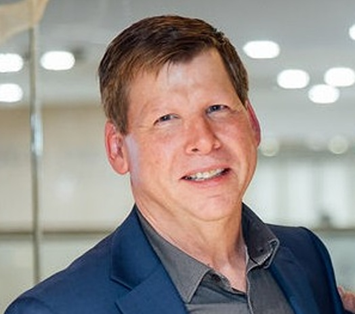
Peter Darby, AIA
Chair, AIA Regional & Urban Design Committee